 Carnival
Beyond Grand Kadooment: The Work and Memory Inside Crop Over
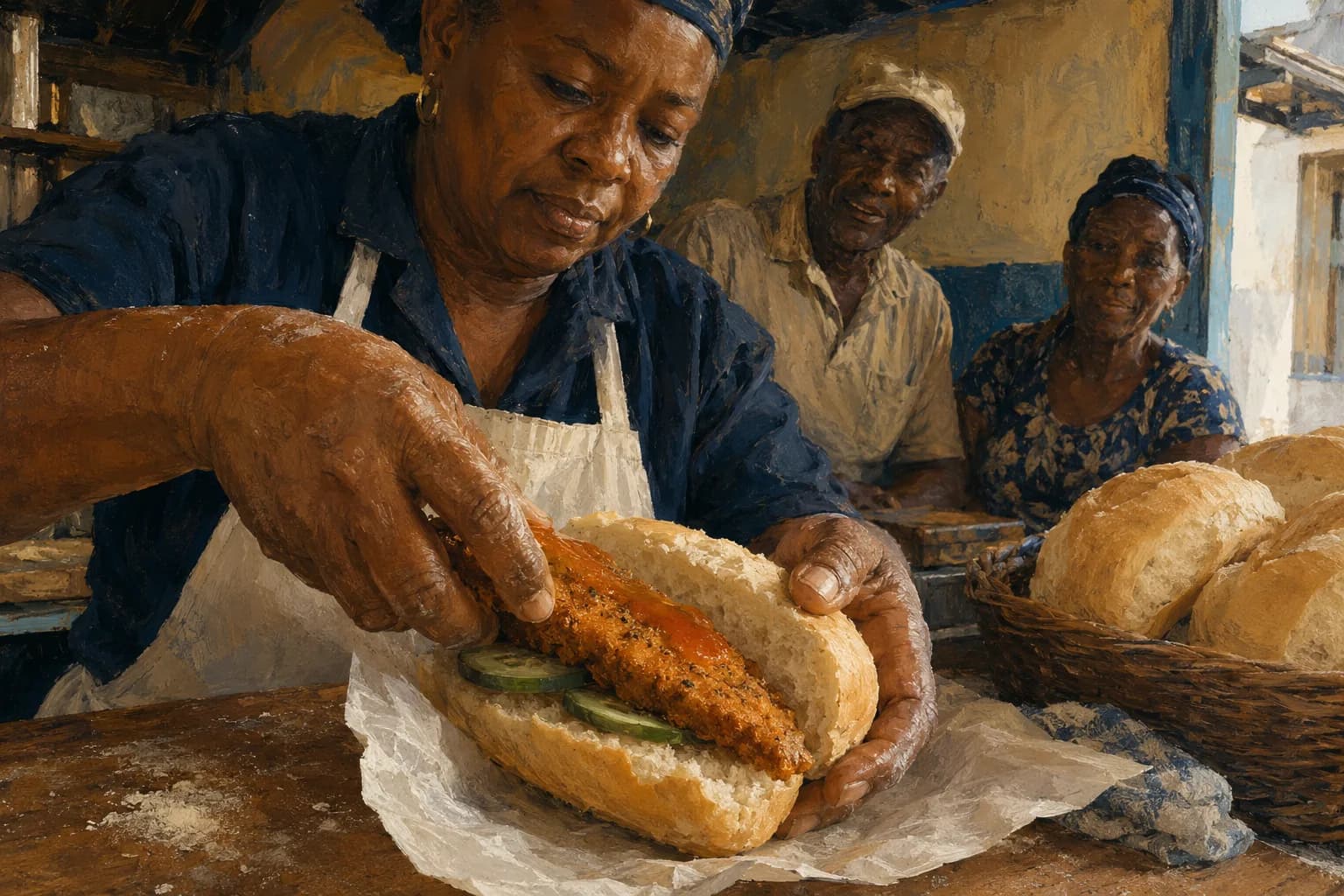
A workroom bending wire into a feathered collar, a fish cake vendor doing pre-season math — Crop Over is Barbados's cultural and economic quarter, not just a party calendar.
LuxTuris Editorial Desk · May 16, 2026
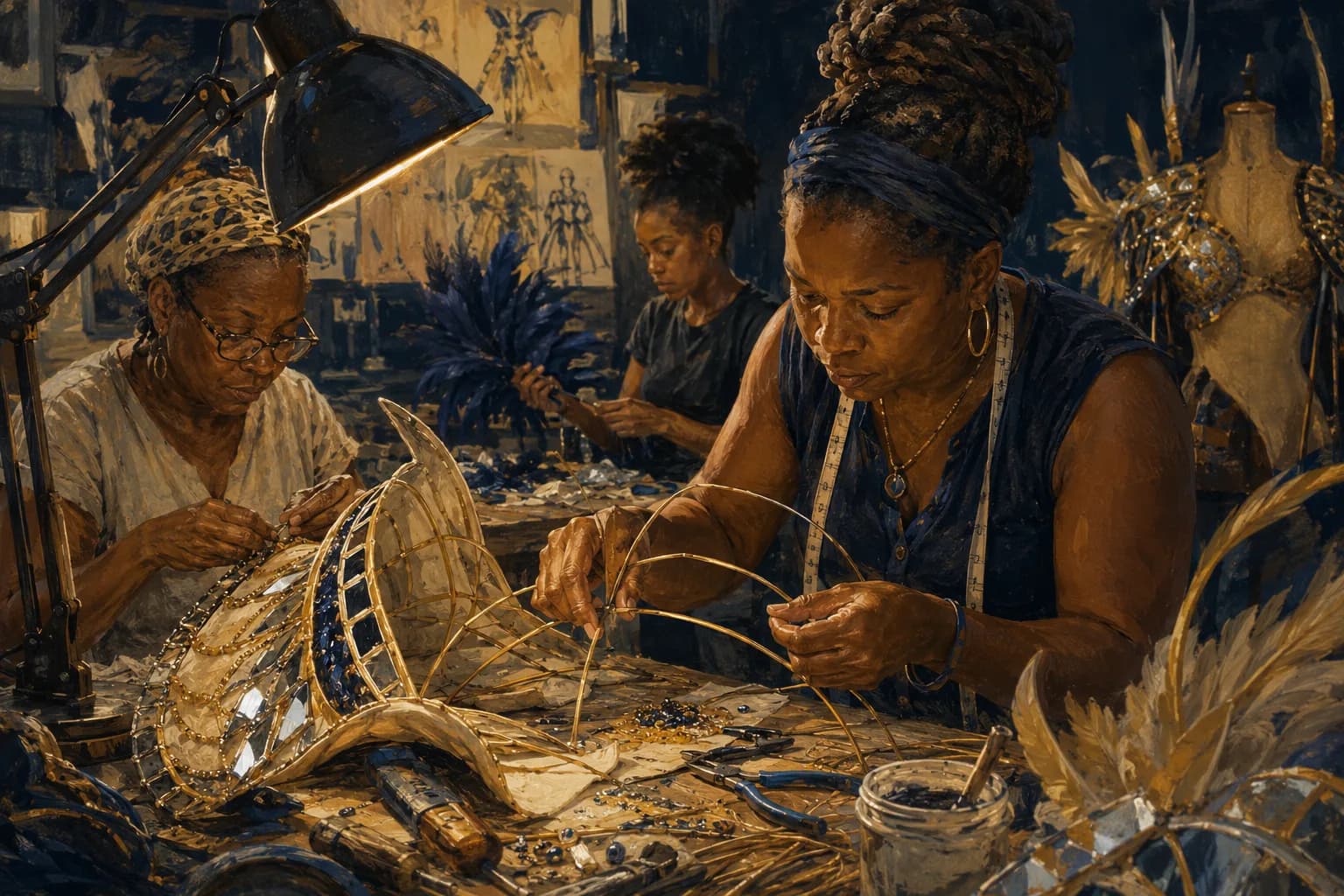
In a composite St. Michael workroom, representing labour repeated across the season, a costume is being built the slow way. Wire has been bent into a frame that will one day be a collar of feathers; glue guns rest hot on a scarred table; trays of gems are sorted by a teenager earning holiday money and an education at the same time; and the designer — who has not had a full night's sleep since the band launched — is holding a backpack frame against the light, checking a line only she can see. Across town, a woman who sells fish cakes and pudding and souse is doing her own pre-season math: how much pork to secure, whether to hire her niece for the big weekends, which events are worth the vendor fee. Neither of them appears on any fete poster. Both of them are Crop Over.
From abroad, Barbados's great season gets compressed into a party calendar — a run of fetes crescendoing to Kadooment Day. That calendar is real, and it is glorious. But it is the visible tenth of something much larger: a season that functions as Barbados's cultural and economic quarter, employing half the island's creativity for months and carrying three centuries of memory under the sequins.
Where the season comes from
The history is worth two beats, because it changes what the party means. Crop Over began in the plantation era — records reach back to the 1780s — as the celebration marking the end of the sugar cane harvest: the last canes brought in, the "crop over," a rare sanctioned festivity in the brutal calendar of the enslaved and, later, of free plantation labor. It carried its rituals — the procession of carts, the burning of "Mr. Harding," an effigy embodying the hard times of the out-of-crop season — for generations, then faded as sugar itself declined, effectively dying out by the 1940s.
In 1974, Barbados revived it deliberately, rebuilding the festival as a national cultural showcase — and the revival took so completely that Crop Over is now the axis of the Bajan year. So the season is a double memory: it remembers sugar, the crop that built and brutalized Barbados, and it remembers the choice, one generation after independence, to take the plantation's calendar and make it the people's own.
The anatomy of a season
Understand Crop Over as a system with several moving economies, all peaking together across June and July toward the first Monday in August.
The music economy moves first. Bajan artists release their season's soca from late spring, competing for the airwaves, the fetes, and the crowns — the Pic-O-De-Crop calypso monarch competition keeping the older lyrical tradition sharp while the soca titles drive the road. A season can make an artist's year; the whole island serves as A&R, delivering its verdicts in real time at every event.
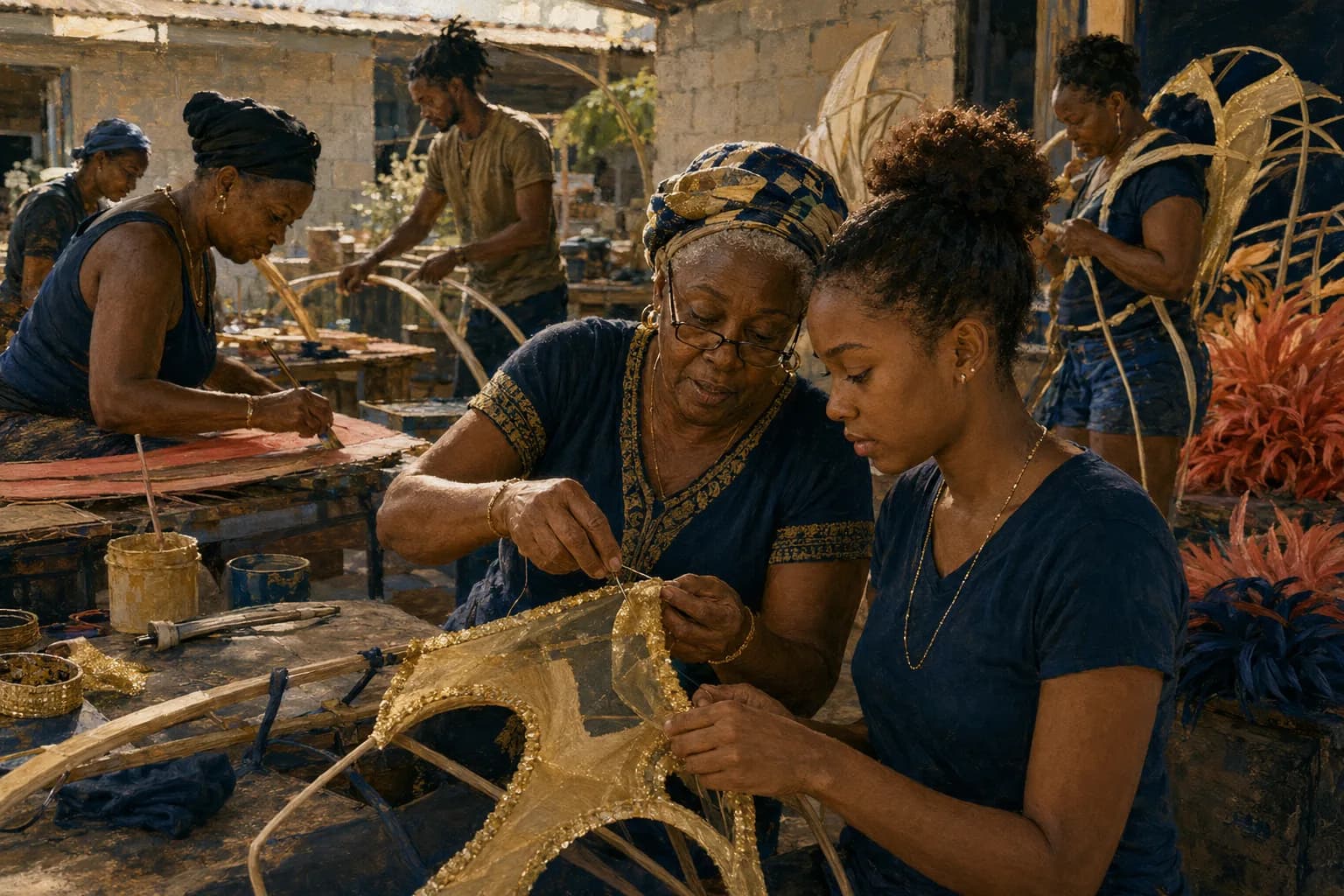
The costume economy runs in parallel: band launches, registrations, and then months of exactly the workroom labor described above — designers, wire benders, seamstresses, decorators, and the informal apprenticeship system that trains the next generation of all four. The food economy scales up beside it — caterers, fish cake fryers, drink vendors, the whole street-food layer that feeds a season's worth of crowds — along with the service layer nobody romanticizes but everyone depends on: drivers, security crews, sound engineers, photographers, makeup artists booked solid from July's first week.
And threading through all of it, the return economy: Crop Over is the great homecoming. Flights from London, New York, and Toronto fill with Bajans coming back — the season is timed, conveniently, to the school summer — and for many families abroad it is the fixed point around which visits, reunions, and children's introductions to Barbados are scheduled. The remittance economy briefly walks around in person, and spends.
The people who work it
Name the roles, because the brief of honest festival coverage is to name the labor. The designer whose band consumes her year. The veteran wire bender whose hands hold a craft that predates the glue gun. The promoter carrying the financial risk of an event that one rainy night could sink. The caterer for whom July revenue underwrites October's school fees. The photographer shooting fourteen events in twenty days. The elder judge at Pic-O-De-Crop guarding the standard of a lyrical tradition older than the revival itself.
For these Bajans, the season is simultaneously their culture and their harvest — an irony the festival's name quietly holds. Crop Over began as the celebration after the work was done. For the modern creative economy of Barbados, Crop Over is the work: the crop now is the season itself, and it is brought in with the same long labor, and the same right to celebrate at the end.
Kadooment, understood
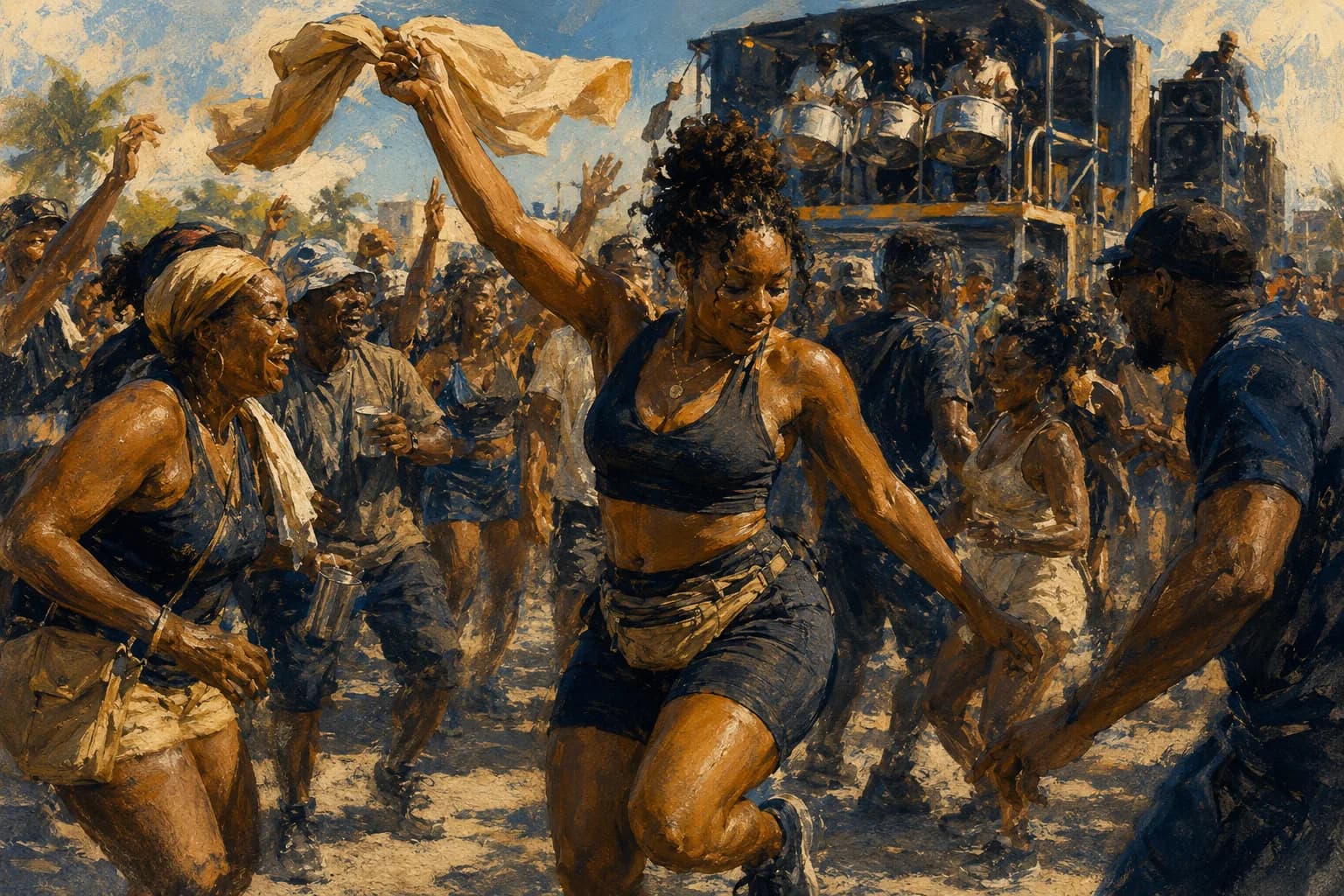
Which brings the finale, framed as the finale. Kadooment Day, the first Monday in August: the bands assemble at the National Stadium in the morning and take the road toward Spring Garden Highway on the coast — thousands of masqueraders in the costumes from the workrooms, moving to the season's songs behind the trucks, the fish cake vendors positioned like chess pieces along the route, the whole island either on the road or watching it.
Seen cold, it is a magnificent street party. Seen with the season behind it, it is a settlement day: the morning when the designer finally sees her line move in sunlight, when the song that won the summer gets its coronation lap, when returning members of the diaspora and residents dance the same road. The festival's relationship to harvest, emancipation, state revival and modern tourism is neither simple nor unbroken. What persists is the decision to mark labour, survival and belonging with public joy. The party calendar was never wrong. It was just the last page of the book.
Editorial note
LuxTuris original
This is evergreen editorial context from the LuxTuris desk, not live breaking news or invented social proof.