 Music
MusicWriting for the Road: The Hidden Craft of Soca Songwriting
"Hands up" is two words on the page and a masterpiece of engineering on the road — the hidden craft of writing soca for a crowd in motion.
LuxTuris Editorial Desk · May 19, 2026
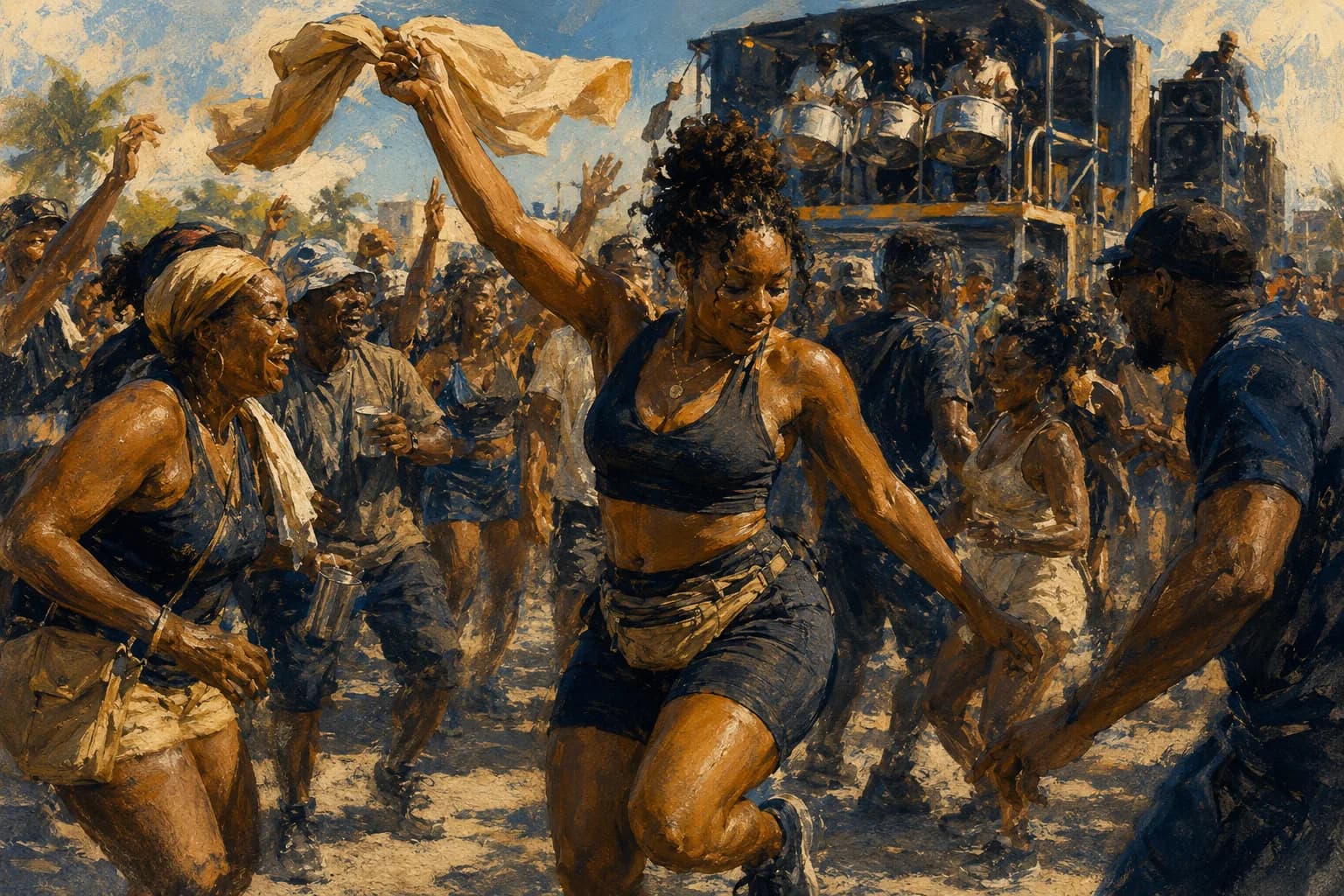
On Carnival Tuesday, a familiar drama unfolds somewhere along the road in Port of Spain. The music truck ahead of the band is the size of a house and has been working the crowd for an hour when the song everyone has been waiting for drops. The build starts — you can feel a vast crowd register it at once, a kind of collective inhale — and then the voice on the truck gives the order: hands up. And hands rise across the band, together on the beat, sunburnt and glittered and obedient with joy. The next command comes — jump — and the road itself seems to bounce, a quarter mile of humanity leaving the ground in unison because a lyric told it to.
Judged on the page, that lyric is two words. Judged on the road — the only court with jurisdiction — it is a masterpiece of engineering. Soca songwriting is the craft of writing not for a listener but for a crowd in motion, and the people who dismiss its lyrics as simple are grading a bridge on its poetry.
The anatomy of a road song
A soca song built for the season has a job description, and its structure follows the job. It must work on a truck speaker heard from two hundred feet through your own heartbeat; it must work for a band crossing a judging stage with one shot at eruption; it must work at 7 a.m. at a breakfast fete when energy has to be manufactured from nothing. So the writing runs on a specific machinery.
The build: tension assembled in layers — a riser, a drum drop-out, the singer narrating the approach ("when I say so…") — because anticipation shared by thousands is itself the drug. The drop: total rhythmic commitment, every element landing together, engineered as a release valve. And through it all, the command structure: imperative verbs, front-loaded and repeatable. Jump. Wave. Hands up. Wine. Follow me. Take a flag. The commands are calls that the crowd's body answers — call-and-response, the oldest African-diasporic musical technology there is, scaled up to a boulevard.
Why so direct? Because ambiguity does not scale. A metaphor reaches one mind at a time; an instruction reaches a city block simultaneously. The genius is in making the command feel inevitable — melodically placed so that the crowd feels it knew what to do a half-second before being told. The best soca writers make ten thousand strangers feel like one rehearsed body, and there is nothing simple about that. It is the difference between writing a sentence and writing a spell.
The masters of the form
The craft has names and dates. Superblue (Austin Lyons) is its prophet: his "Get Something and Wave" took the 1991 Road March — the title given each year to the song played most at Carnival's judging points, soca's on-the-ground electoral college — and in doing so essentially patented the instruction anthem; Trinidad has been waving on command ever since. His run of Road Marches through the 80s and 90s built the template: the build, the call, the eruption. Machel Montano, the genre's relentless modern engine, has taken the Road March again and again — "Big Truck" (1997) through "Like Ah Boss" era and beyond — by understanding better than anyone that a soca song is a event you can rewind. Fay-Ann Lyons, Superblue's daughter, won Road Marches in her own right ("Display," 2003; "Meet Super Blue," 2009 — dynasty answering dynasty). And in 2019, "Famalay" — Skinny Fabulous, Machel, and Bunji Garlin, three islands' energy on one riddim — took the road with a one-word thesis about unity that a million people could shout. Bunji Garlin's "Differentology" (2013) meanwhile proved the craft could travel: a soca record that conquered international playlists without surrendering its road DNA.
Two engines: power and groovy
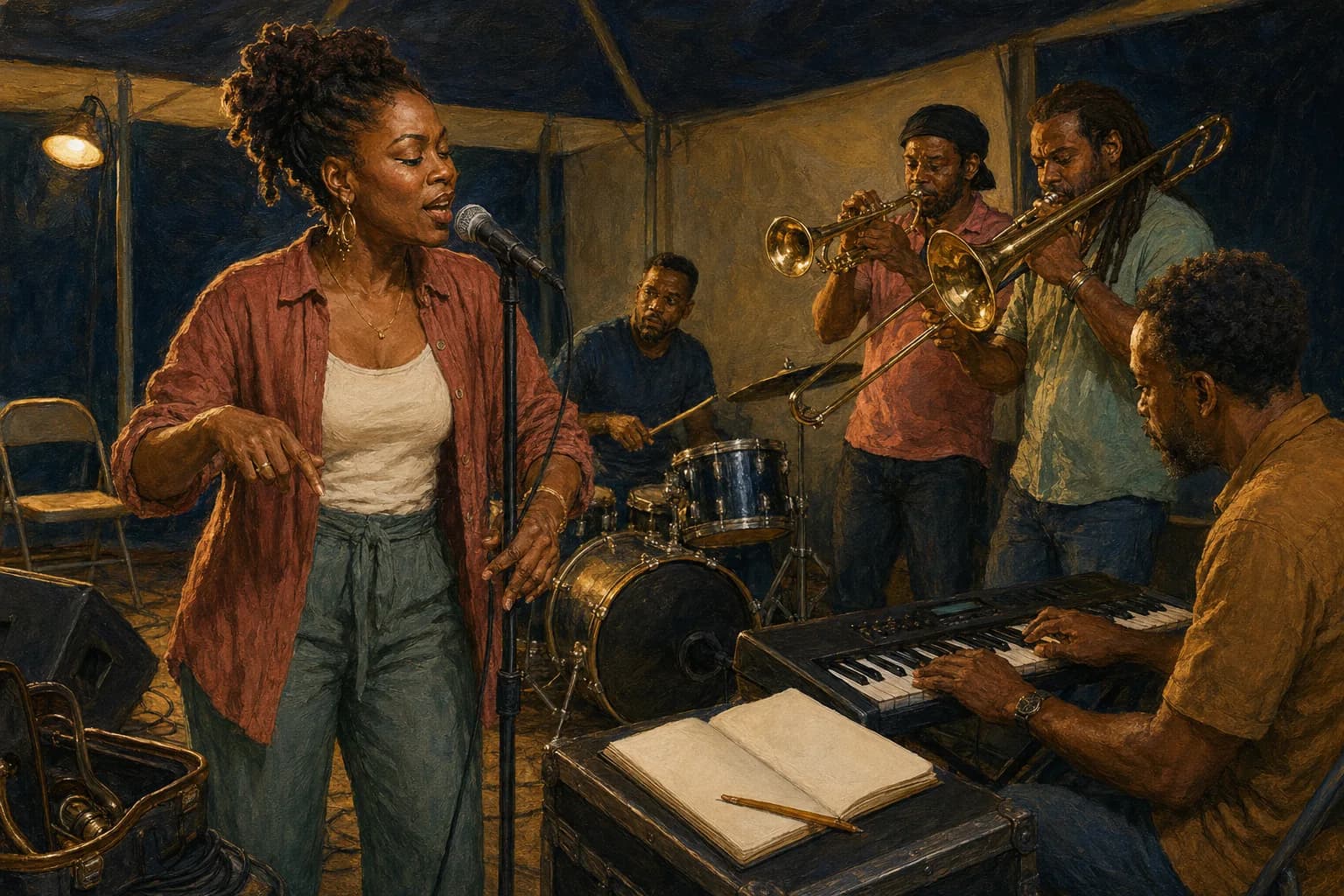
The form splits into two disciplines with different job descriptions. Power soca is the high-tempo weapon — 160 BPM, built for the jump, the stage crossing, the last hour of a fete; its writing is maximal command, minimal narrative, pure crowd hydraulics. Groovy soca runs slower and sweeter — melody forward, waistline-oriented, romance and picong allowed back into the lyric; it is the music of the mid-afternoon cruise, the cooler fete, the wine rather than the jump. A complete season needs both, and the great writers can shift registers: the groovy song seduces the crowd, the power song detonates it. Judging one by the other's rules — asking the power anthem for lyricism, asking the groovy tune for explosion — misses that they are different tools from the same workshop.
The release function
Underneath the craft sits the reason the craft exists. Carnival is, among everything else, a scheduled catharsis — the annual, sanctioned unclenching of a society, with roots in emancipation celebrations and the deep human need to periodically put the burdens down in public, together. Soca is the operating software of that release. The songs are written knowing that the person jumping to them has been carrying a year — the job, the grief, the bills, the distance from home — and that for two days on the road they are entitled to weightlessness. "Free up yuhself" is not a party slogan; it is a clinical instruction. The diaspora knows this most sharply of all: for the nurse flying in from London, the season's songs are the sound of permission — and the writers write with that responsibility in the room.
That is why a season lives on in one line. Years later, the opening riser of a certain tune will drop at a wedding and every Trinidadian in the hall will be momentarily returned to a specific Tuesday, a specific road, a specific version of themselves with their hands in the air. Soca songs are not just played; they are time-stamped.
The songwriter on the truck
Picture the end of the process. The writer who built the song — who chose the verb, placed the command a half-beat before the drop, tested the call against an imagined crowd months ago in a studio — is now standing on the truck, watching the road obey. Ten thousand hands rise on the word hands. The bridge holds the weight it was designed for. Somewhere in the crowd, a person who arrived heavy is, for three minutes and forty seconds, entirely without gravity.
There are writers who move readers to tears one at a time. Soca's best writers move a city off the ground on the count of four. Call the lyrics simple if you like — but only after you have made a boulevard jump.
Editorial note
LuxTuris original
This is evergreen editorial context from the LuxTuris desk, not live breaking news or invented social proof.