 Travel
Jamaica Beyond the Resort Strip: Travel with Depth, Not Just Distance
The cheap version of Jamaica isn't the diminished version — it's route taxis, cookshops, and the country the all-inclusive model holds at a distance.
LuxTuris Editorial Desk · May 27, 2026
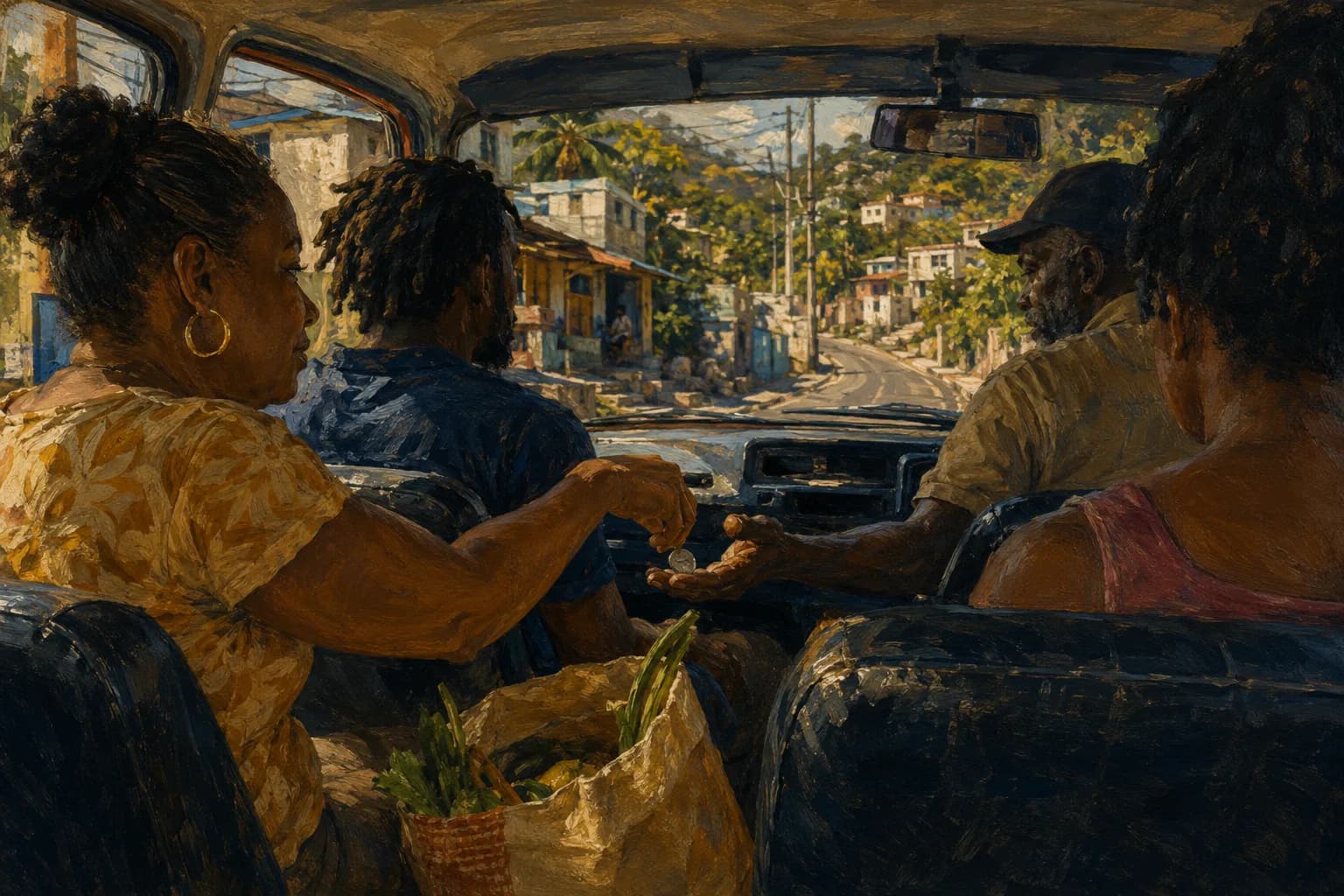
Licensed route taxis are commonly identified by red public-passenger plates, but vehicle type, route practice and occupancy vary. You are in the back with a market lady and her bags, a schoolgirl in uniform, and a man who greeted the driver by a nickname; overcrowding is a safety concern, not an authentic experience to seek out. The radio is on. Fares change by route and should be confirmed before travel. When the last seat fills, the car pulls out toward the next town along a route it runs all day, every day, and the journey reveals a transport system used daily by many residents. Visitors should confirm the route, use licensed vehicles, avoid overcrowding and follow current local safety advice.
This is the real secret of budget travel on the island, and it is worth stating plainly: the cheap version of Jamaica is not the diminished version. The all-inclusive model sells insulation — the island held at a distance, behind a buffet. Traveling on a budget forces you through the insulation, and what's on the other side is the country. The skill is planning it with respect for how the island actually moves.
A shape for the trip
Rather than a list, take a route — one honest week, adaptable.
Start in Kingston, which the resort economy skips and which is the cultural capital of the entire Anglophone Caribbean. Two or three days: the Bob Marley Museum and Trench Town Culture Yard for the music history; the National Gallery downtown for the art nobody tells you Jamaica has; Devon House for the famous ice cream and the Georgian shade; nights where the real sound systems and session parties are — asked about locally, because the week's best events are common knowledge on the ground. Stay in a guesthouse or small hotel in New Kingston or Half Way Tree and the city is walkable-plus-taxis.
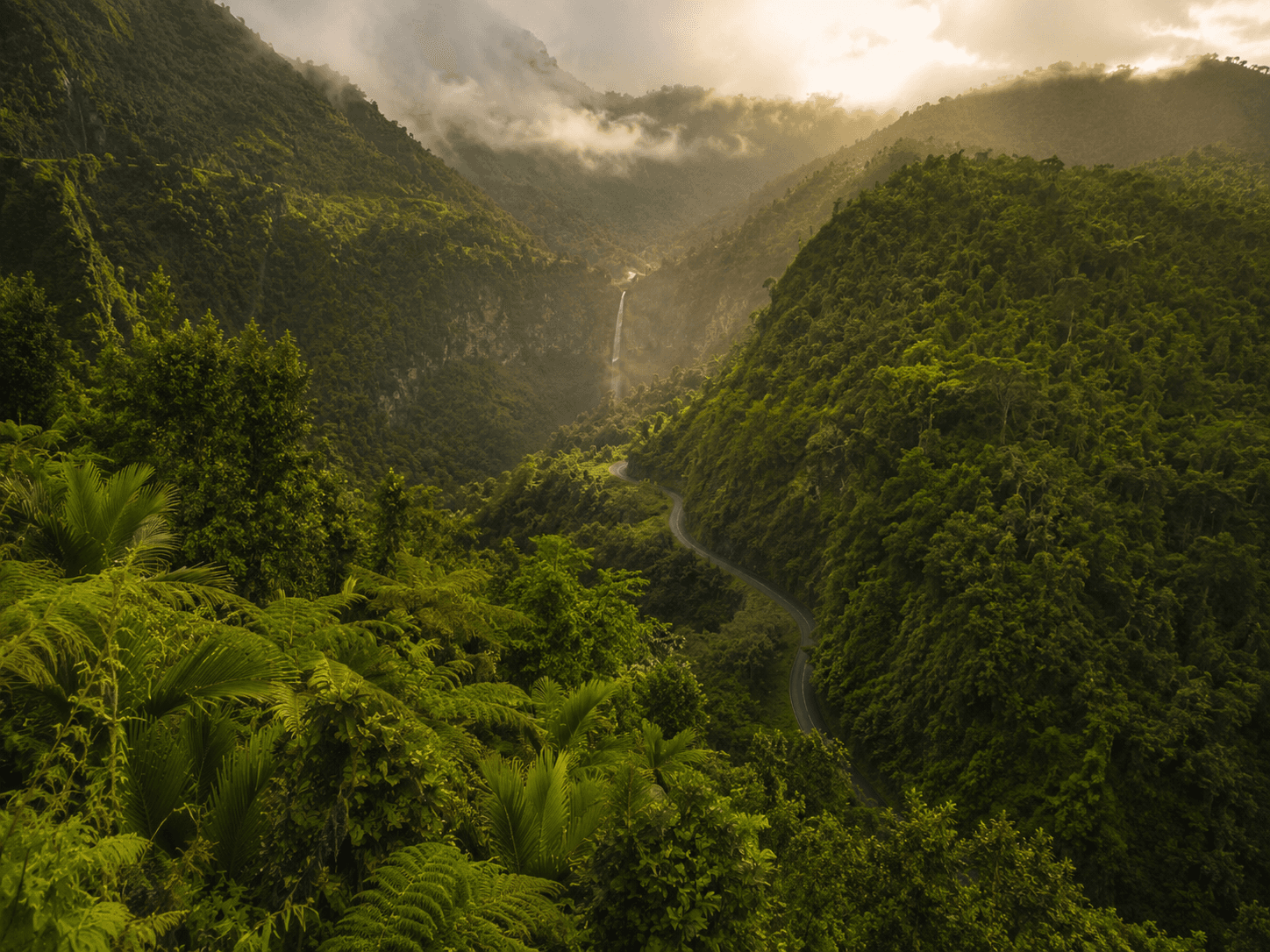
Then cross the island to Portland, the lush northeast parish that mass tourism forgot and travelers who know keep quiet about. Port Antonio as the base: the Blue Lagoon, Frenchman's Cove, rafting on the Rio Grande if the budget stretches, and Winnifred Beach — one of the great free public beaches, community-run, with fried fish and festival cooked steps from the sand. Boston Bay, up the road, is the storied birthplace of jerk; eat pork and chicken from the smoke at the roadside pits and understand what the hotel version was imitating.
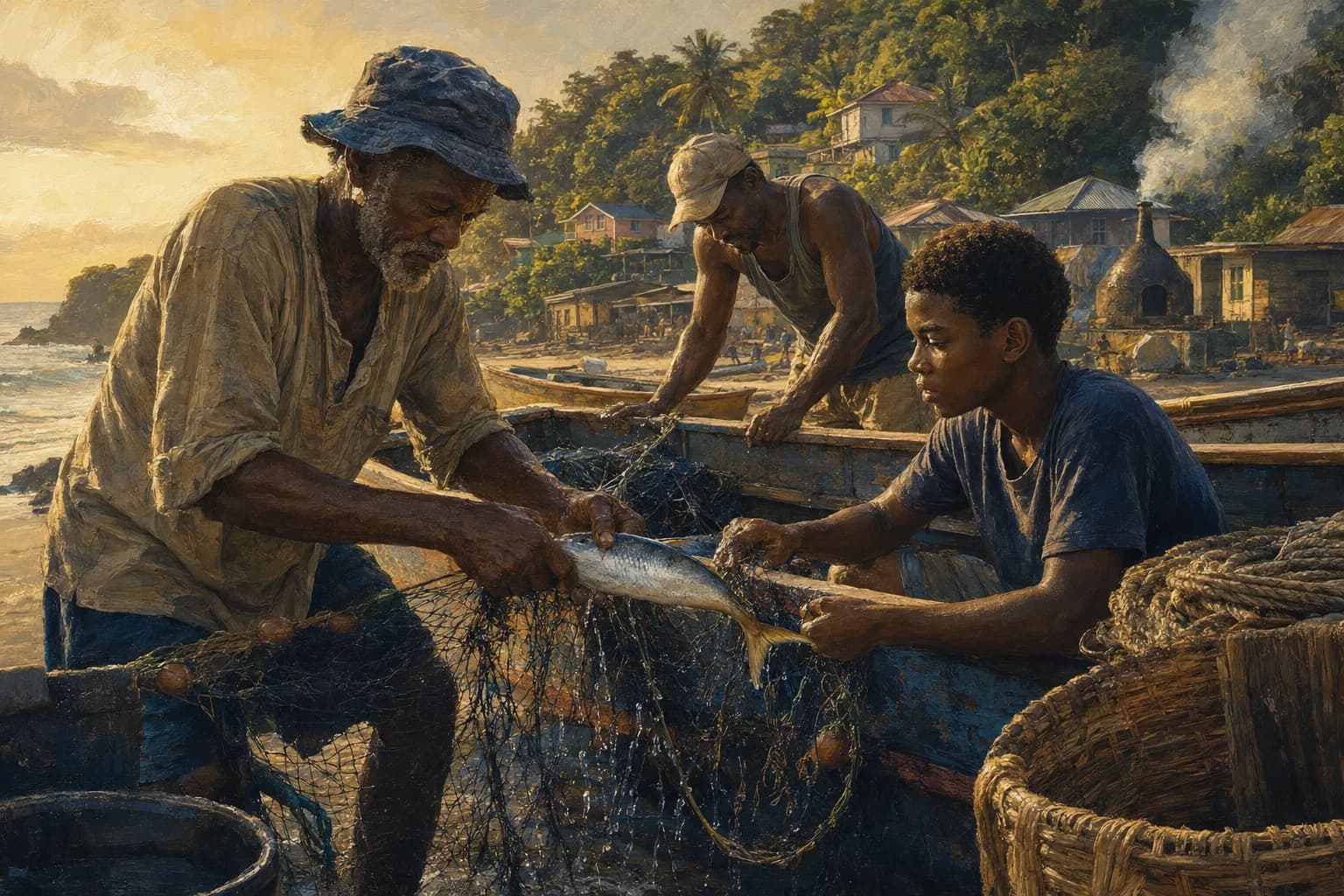
Finish south in Treasure Beach, St. Elizabeth — the fishing-village coast where guesthouses grew up in community scale rather than corporate scale, where the sea is calm, the vibe is settled, and a boat trip to the Pelican Bar (a shack on stilts a mile out to sea) is the one splurge everyone endorses. The south coast is the island at its most unhurried, and the correct final chapter.
Moving: the transport truth
Two systems carry the budget traveler, and both deserve demystifying. Route taxis — the red-plated shared cars — run fixed routes between towns for small set fares. The etiquette: flag them anywhere on the route, say where you're going, pay what everyone pays (ask a fellow passenger if unsure), squeeze without complaint, and say good morning when you enter — Jamaica notices manners. They are how most Jamaicans move, they are cheap beyond argument, and chaining them will take you anywhere eventually. For the long hauls, the Knutsford Express is the answer: a genuinely comfortable scheduled coach network linking Kingston, Montego Bay, Ocho Rios, Port Antonio and the south, with fares that run in the range of US$10–30 depending on the leg. Kingston to Port Antonio by Knutsford, then route taxis for everything local, is the classic budget architecture. The one rule above all: respect distances. Jamaica looks small on a map and is not small on its roads — mountain routes take hours, night driving is best avoided, and an itinerary that hops parishes daily is an itinerary written by the map instead of the island.
Eating: where the budget wins
Food is where budget travel stops being a compromise and becomes an upgrade. The cookshop — the modest local restaurant serving a rotating pot — will feed you brown stew chicken, curry goat, or fried fish with rice and peas for roughly the price of a resort cocktail; a solid cookshop plate runs a few hundred to around a thousand Jamaican dollars depending on the protein and the parish. The patty shops — Juici and Tastee, the twin national institutions — hand you the workingman's lunch for pocket change. Jerk centers, fish fry spots on Friday nights, roadside soup men on Saturdays, festival and bammy at the beach: eat where the taxi drivers eat, and you will eat better than the buffet at a tenth of the price while your money lands in a family business instead of a chain's ledger.
The respect layer
Because budget must not mean extractive — cheapness achieved by squeezing people is just extraction with a backpack. The distinction is where the money lands: a US$40 guesthouse night goes to a household; a fair price paid to a craft vendor without the triumphant haggle-to-the-bone; a tip to the boat man; entrance fees at community-run attractions like Winnifred, where the funds keep the beach public. Ask before photographing people or their yards. Take local advice on where to go and where not to — Jamaicans give it freely and it is the best security infrastructure available. The budget traveler's advantage is proximity; the obligation that comes with proximity is behaving like a guest rather than a consumer.
Going back without the buffer
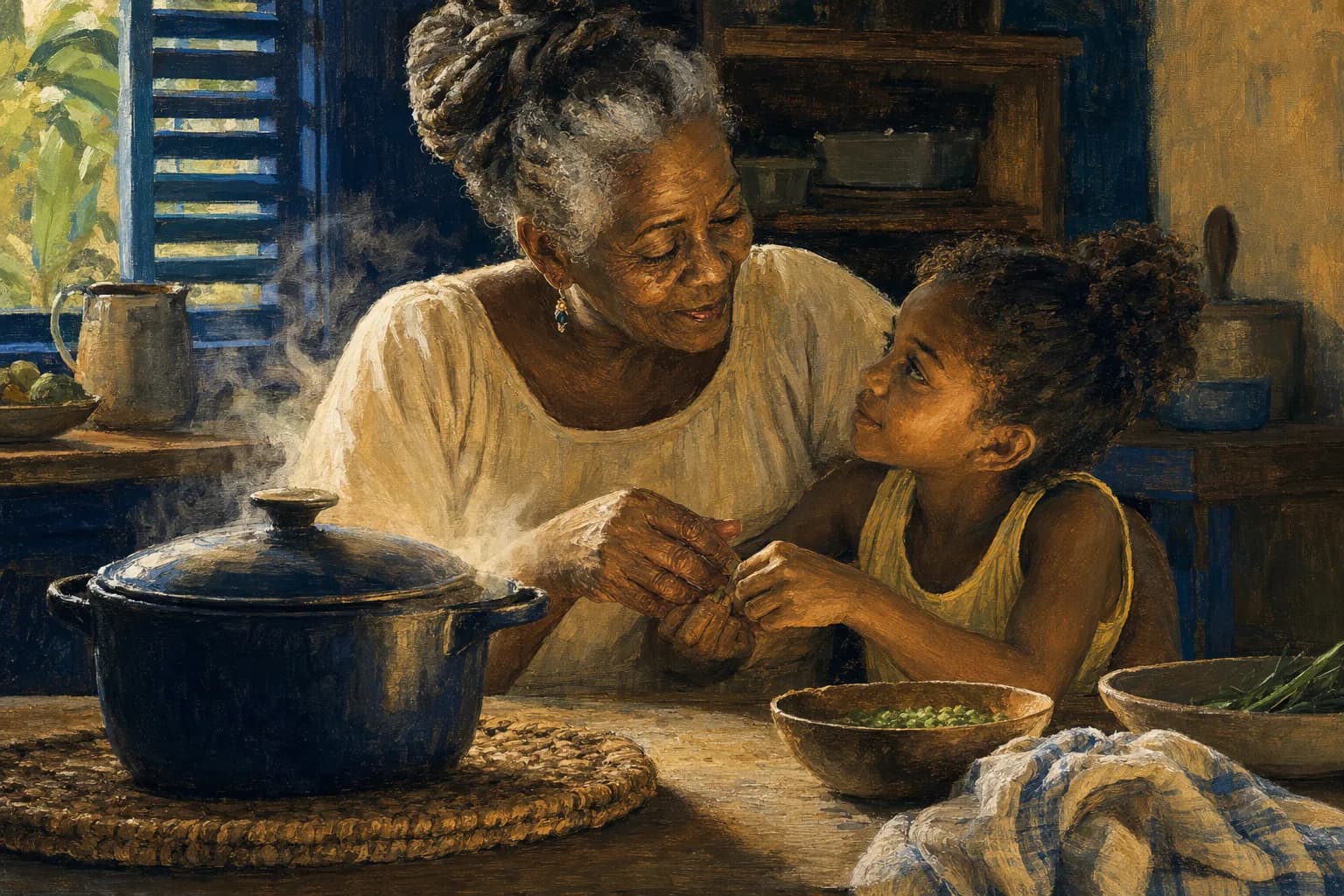
One reader deserves a direct word: the diaspora traveler "going back" — the second-generation visitor whose family narrative includes this island but whose visits have been resort-shaped, the country experienced through a lobby. The budget version of Jamaica is, for you, not a downgrade but a homecoming protocol. The route taxi through your parents' parish, the cookshop plate that tastes like your grandmother's Sunday, the guesthouse conversation with people who talk like your uncles — this is the island your family actually left, met on its own terms and its own roads. It costs less than the resort. It gives back immeasurably more.
The Probox fills. The driver pulls out. The market lady asks where you're from, and the answer starts a conversation that lasts to the next town. The value is not a bargain purchased from other people's daily commute. It is a clearer understanding of how the country moves, approached with caution and respect.
Editorial note
LuxTuris original
This is evergreen editorial context from the LuxTuris desk, not live breaking news or invented social proof.