 Food
FoodBetween Two Bara: The Trinidadian Genius of Doubles
Two fried baras, curried channa, and a century of Indian indenture folded into Trinidad's most argued-over breakfast.
LuxTuris Editorial Desk · July 6, 2026
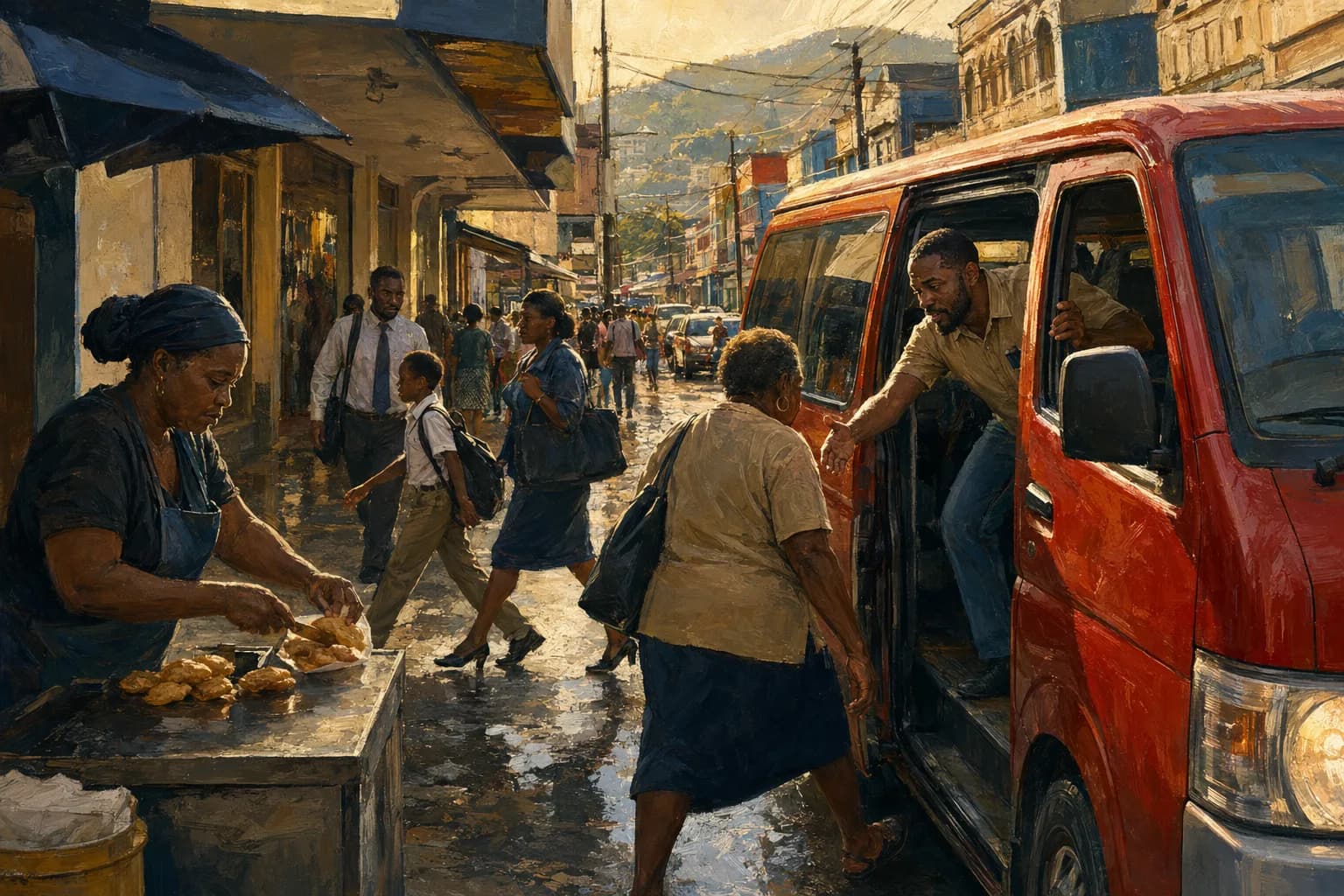
Before dawn, the oil is already talking. At a roadside doubles stand, a shallow iron pan sits over a propane flame. Beside it, a woman in a faded apron works with the ease of someone who has done this for more mornings than she could count. Her hands hardly need her attention anymore.
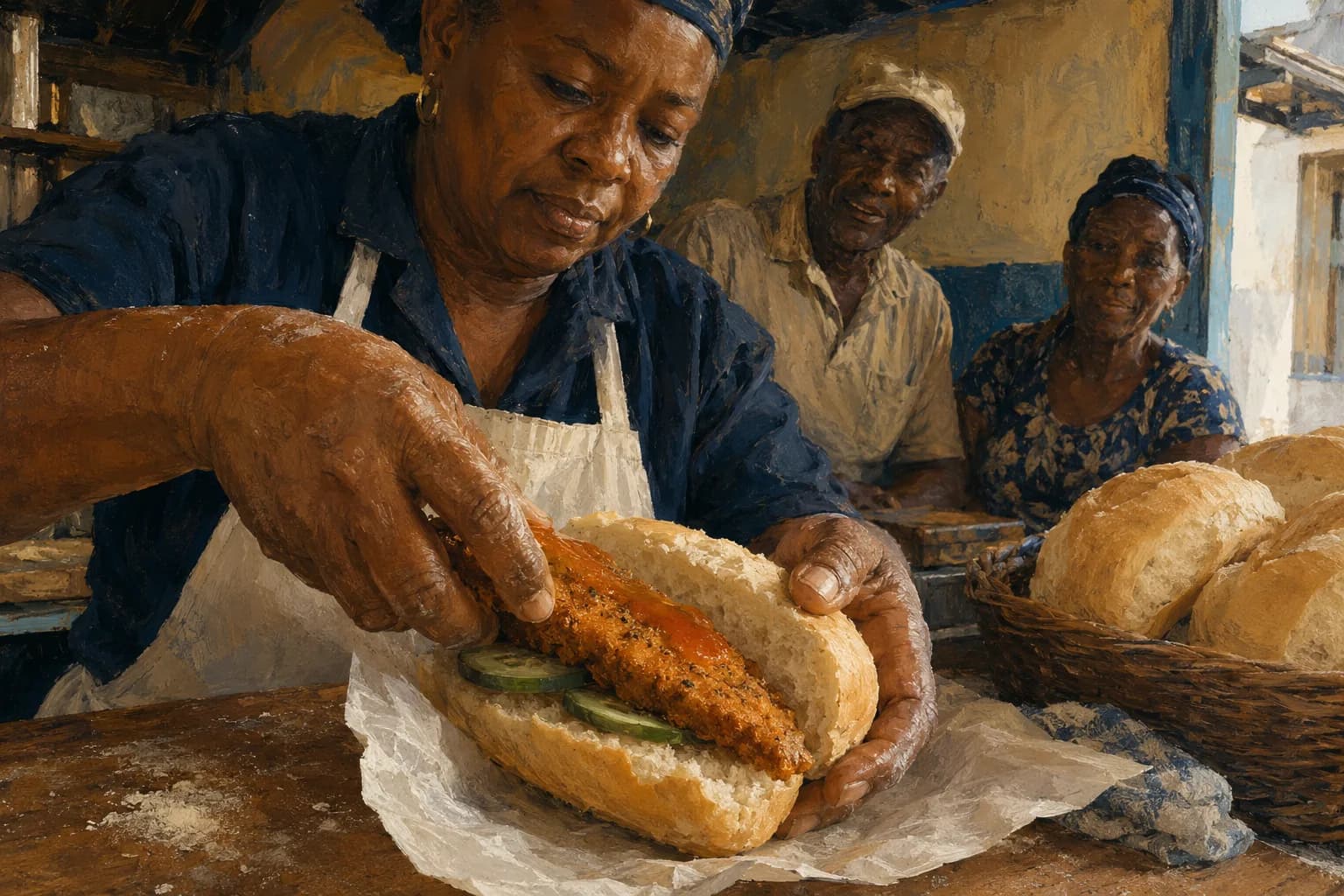
She presses a ball of dough between her palms, stretches it thin—thinner than you would trust—and slips it into the heat. It swells almost immediately, the edges turning gold. She flips it once and lays it on paper beside its twin.
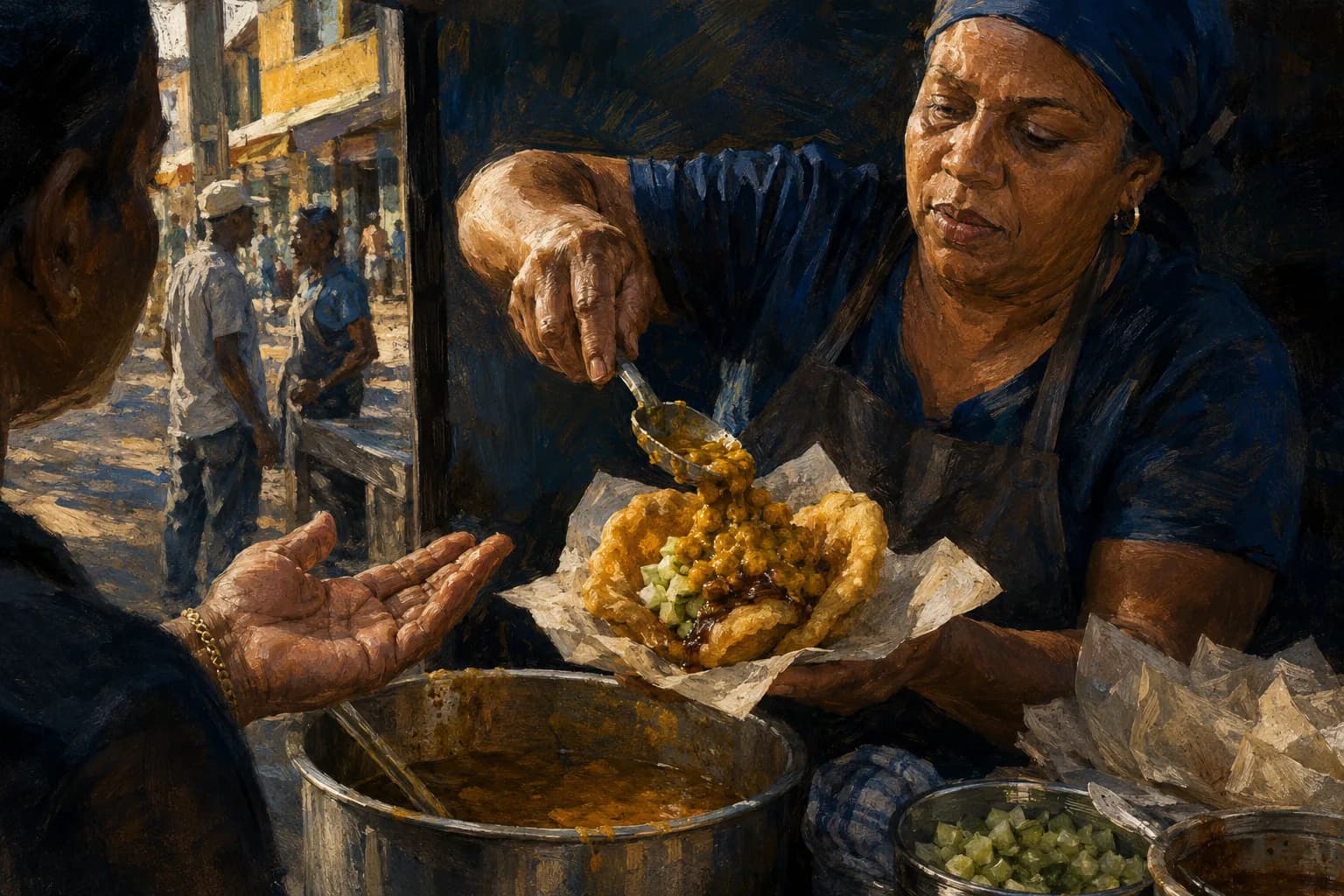
Then comes the channa, spooned hot over both baras. Tamarind. Cucumber.
"Slight pepper," the customer says, which everyone knows is a lie he tells himself.
The customer folds the whole thing inward and eats it standing beside the stall, sauce tracking down his wrist. Doubles does not encourage ceremony.
The day is underway.
For anyone who grew up in Trinidad, none of this needs explaining. Doubles is two soft baras cradling curried chickpeas, dressed to taste, wrapped in paper, and gone in four bites. It is breakfast for schoolchildren and office workers, the meal after a fete when the sun is threatening to come up, Carnival fuel, a hangover cure. It is what you reach for when you want something cheap and fast that still feels like somebody made it.
The simplicity is a disguise. There is a century of history folded into that paper.
After emancipation, the British planters who ran Trinidad's sugar estates needed labour. Beginning in 1845, they found it through indenture—thousands of workers shipped from India, most from regions now known as Uttar Pradesh and Bihar. They arrived with food traditions built around fried breads, pulses, chutneys, and heavy seasoning.
Then Trinidad went to work on those traditions, the way Trinidad goes to work on everything: new ingredients, new economics, new neighbours, a new tongue.
One widely repeated origin story begins in Princes Town in the 1930s with Emamool Deen, known as Mamool, and his wife, Rasulan, selling curried channa and fried bara. Family histories differ on details, and the surviving record does not justify turning one account into uncontested fact. Customers began asking for the bread doubled. Two baras instead of one. A "double."
The name outlived everyone involved.
Different branches of the family still argue over who invented exactly what, the way families do, but the argument is mostly academic now. Whatever its precise point of invention, doubles became a public tradition through the vendors and customers who carried it across Trinidad. Street food belongs to the people who make it every morning and to the customers who quarrel over it.
The roots are Indian, no question. But the doubles eaten today could only have happened in Trinidad. Indian spice logic sits beside Caribbean pepper, shado beni, tamarind, and kuchela with its preserved-mango bite. Wheat flour eventually replaced the older split-pea doughs because it was cheaper and easier to scale—a survival decision that became a texture people now defend as gospel.
Watch a good vendor work and it looks like nothing.
It is not nothing.
The bara has to be soft enough to fold and strong enough not to surrender beneath hot channa. The dough needs rest; some swear by leaving it overnight. Stretch it gently and fry it quickly, and it puffs. Rush it or roll it too hard, and you end up with something flat, greasy, and sad.
The channa is its own discipline. Chickpeas are cooked until the skins give up, then seasoned hard with cumin, turmeric, and garlic, perhaps with a pinch of baking soda to help them along. What you want is looseness: some chickpeas holding their shape, others collapsing into the gravy, the whole thing wet enough to run.
Then come the negotiations.
Tamarind for sweet and sour. Cucumber to cool things down. Shado beni cutting through, green and sharp. And pepper—slight, medium, heavy, or the unspoken fourth category that vendors recognise by the look in your eye.
Get every element right, and no single ingredient matters anymore. It becomes one thing: soft, sharp, hot, sweet, and running down your hand.
And, of course, nobody in Trinidad agrees on where to get it.
Princes Town has the history. Debe has the reputation—a stretch of road in the south lined with vendors, each with loyalists, each offering small differences in dough and seasoning that people defend like a family name. Southern doubles, the believers say, means softer bara, looser channa, and more generous seasoning.
Port of Spain and the east–west corridor answer with speed: doubles assembled in seconds outside taxi stands and schools, eaten on pavements, finished before the maxi pulls off.
The debates never end.
This one's bara is too thick. That one's channa is dry. This place has the best pepper, but the tamarind is weak. That other place fell off five years ago—do not bother. The little stall with no sign and no Instagram beats all of them.
The arguments are not a side effect of doubles culture. They are doubles culture.
Agreement would ruin it.
The dish travels too, and it travels stubbornly.
In Brooklyn, a shop like A&A Bake Doubles and Roti feeds lines of people who grew up in Trinidad, visited as children, or know the island mostly through their parents' kitchens. The rent is New York rent, and the price shows it, but the expectations came over on the plane and never softened: bara soft, channa wet enough to run, pepper taken seriously.
London gets its doubles at Caribbean restaurants, festival stalls, and late-night events, where the queue after a sound-system session looks a lot like the queue after a fete back home.
In Scarborough, it is a weekend ritual. Families pick it up like groceries. Elders compare it with what they remember. Children raised abroad learn how much pepper they can really handle and which vendor the family has decided is acceptable.
Things change out there. Portions grow. Ingredients are substituted. Somebody, somewhere, is selling a filling that would scandalise Princes Town.
But the standard never moves because the standard is not written anywhere. It is a memory.
However far doubles travels, it is judged against the way it tastes in Trinidad and, more precisely, against the way it tasted to you: before school, after that one party, or on the corner where the vendor knew your order before you opened your mouth.
That is the real weight of the thing.
It is cheap food born of working-class necessity, and it is also a record of movement—India to Trinidad, country to city, island to Brooklyn and Brixton and Scarborough. It travels well because it asks for nothing. No table. No cutlery. Half the time, not even a plate.
Handed over warm, folded in paper, eaten now.
Channa spills. Tamarind catches on your fingers. The pepper builds at the back of your throat and stays for a while.
And for those few minutes, wherever you are standing, Trinidad is not so far.
Editorial note
LuxTuris original
This is evergreen editorial context from the LuxTuris desk, not live breaking news or invented social proof.