 Music
MusicBefore Reggae: The Restless Brilliance of Ska
Built deliberately in Kingston at the end of the 1950s, ska flipped the beat, gave a new flag its sound, and mutated twice before reggae even arrived.
LuxTuris Editorial Desk · July 14, 2026
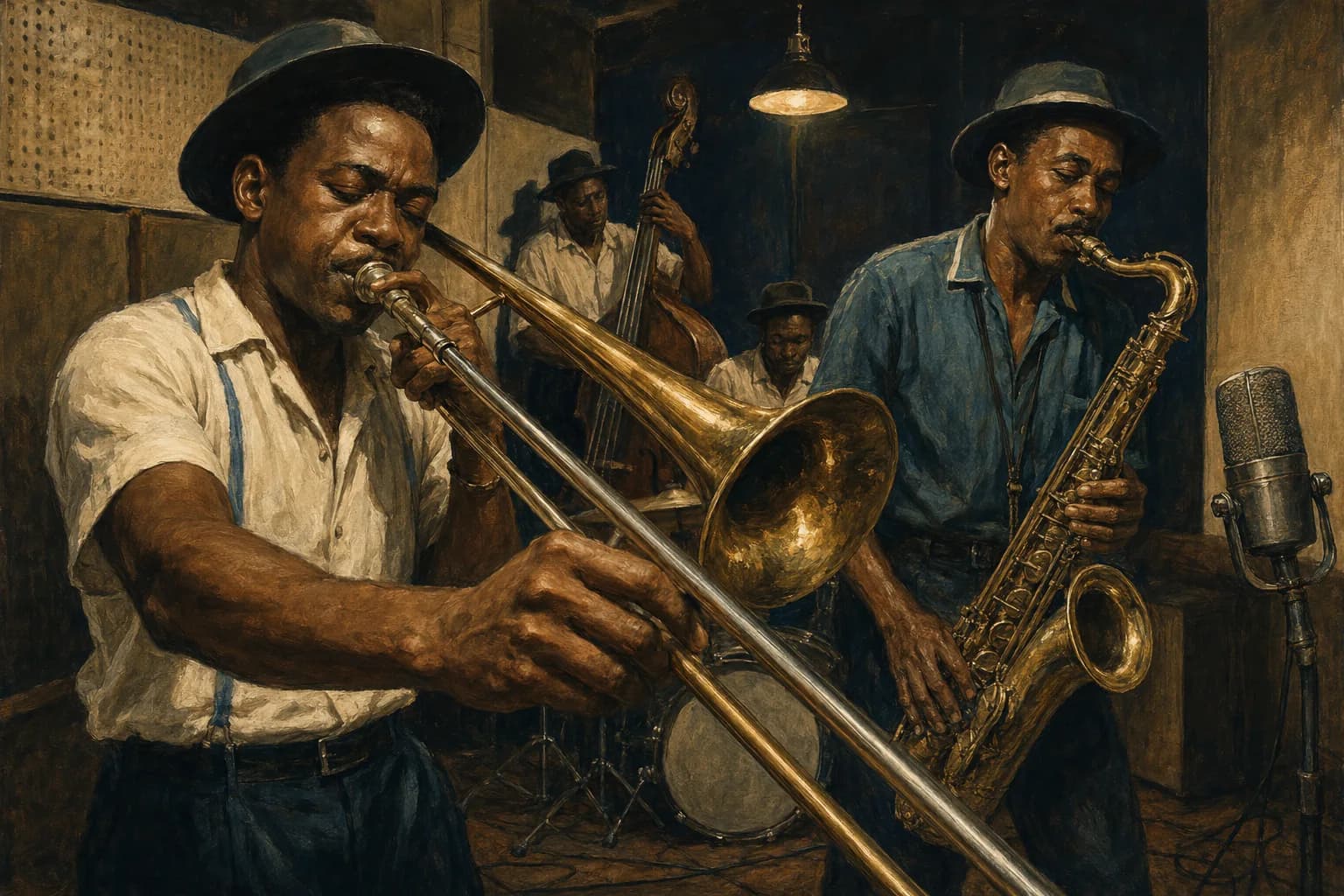
At Studio One on Brentford Road in the early 1960s, musicians recorded live in rooms where ensemble precision mattered and opportunities for repair were limited.
Drummer Lloyd Knibb helps drive the rhythmic language he was instrumental in developing alongside other musicians, producers and sound-system innovators. The bass walks forward like a man late for work. Guitar and piano chop the offbeat, that skank, the upstroke that gives the music its name and nervous joy, while the horns wait, coiled.
Then they hit. Don Drummond's trombone sounds dark and mournful even at speed. Tommy McCook and Roland Alphonso's saxophones answer brightly.
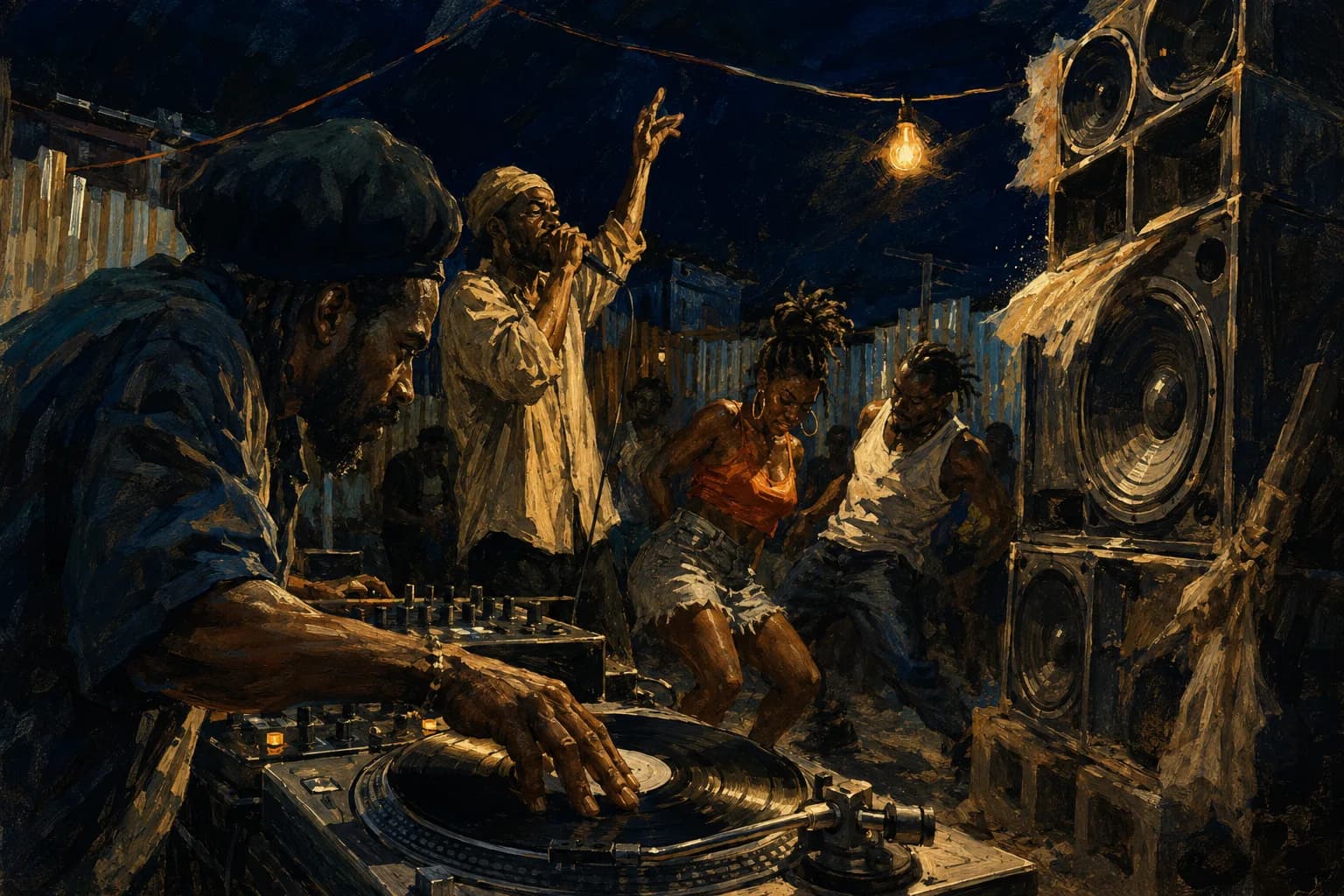
Nobody in the room is standing still because ska makes stillness physically unavailable. The knees go first. Then the elbows start pumping like the dance the whole island is doing that year. Rowing, they called it, arms working an invisible oar. The tune runs three minutes flat because the sound system crowd it is headed for does not need more than that to lose its collective mind.
That is the sound, and it is worth being precise about it because ska is one of the few genres you can identify from a single bar. The emphasis is flipped off the downbeat and onto the afterbeat. A shuffle borrowed from American R&B is turned inside out. Horns carry melodies the way voices do elsewhere. Everything is faster and brighter than what came before.
Play it in any room and watch shoulders start negotiating with the offbeat.
The body understands ska before the brain does.
It was built deliberately in Kingston at the end of the 1950s.
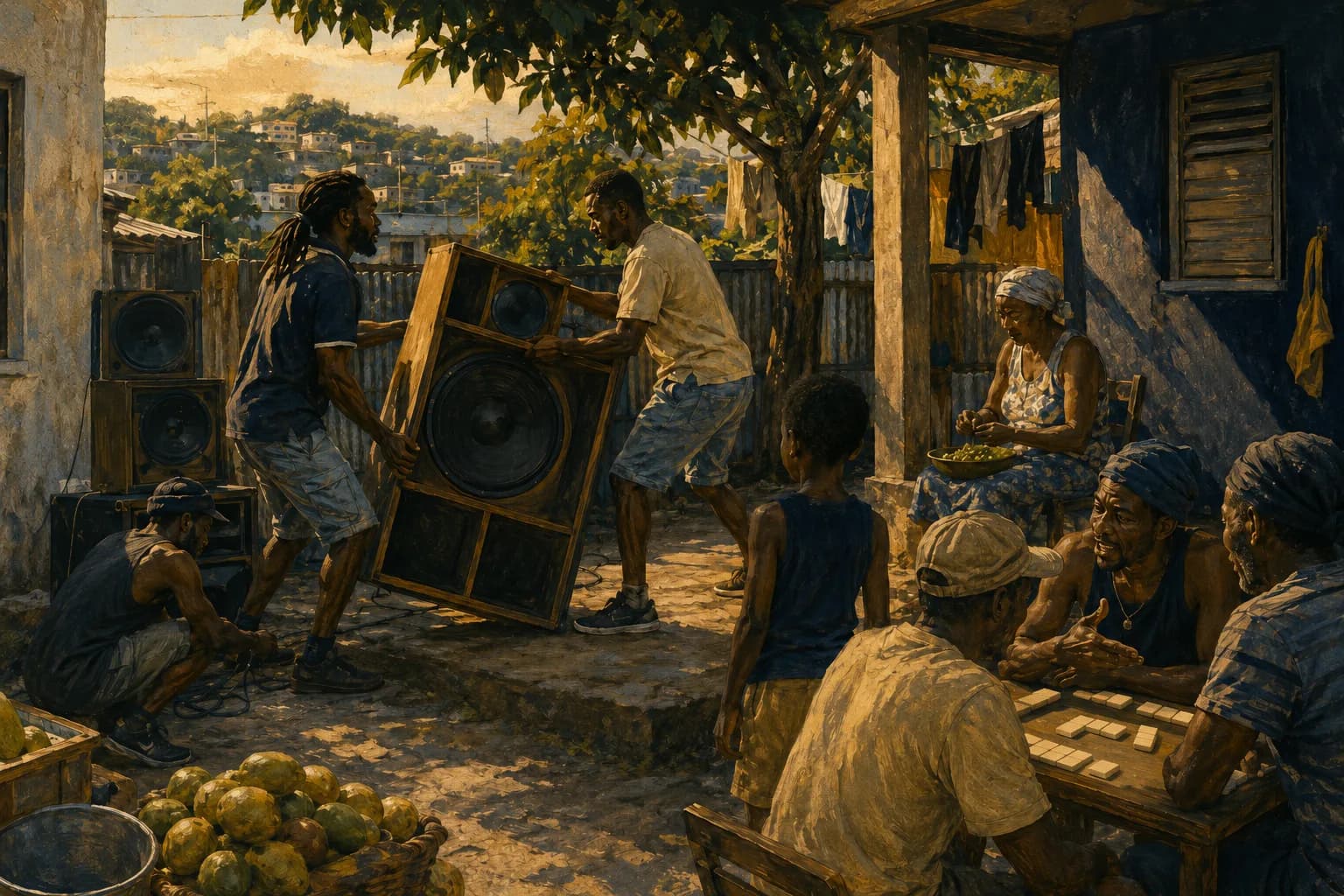
The sound systems, Coxsone Dodd's Downbeat and Duke Reid's Trojan, had been running lawn dances on imported American R&B. When that supply shifted toward smoother sounds, the operators began cutting their own records for their own crowds.
The results sounded Jamaican from the first take.
Pianist Theophilus Beckford's "Easy Snappin'," cut in the late 1950s, catches the accent migrating in real time, his piano leaning onto the afterbeat like a man testing a floorboard. He is the pioneer almost nobody outside Jamaica names, and the music runs straight through him.
In 1960, Prince Buster produced the Folkes Brothers' "Oh Carolina" and did something socially radical to get its rhythm. He brought in Count Ossie and his Rastafari drummers from the Wareika Hills, men mainstream Jamaica then treated as outcasts, and put their hand drums on a record that everybody's grandmother ended up loving.
In 1964, the island's best session players, Knibb, Drummond, McCook, Alphonso, and bassist Lloyd Brevett among them, formalized as the Skatalites and spent roughly a year recording what still stands as the genre's high canon.
Knibb is the other undersung name. Drummers around the world play patterns he worked out at Studio One without knowing whose hands they are quoting.
What was the music saying?
Everything the moment contained.
Jamaica became independent on August 6, 1962, and ska is what a new flag sounds like when the people waving it are twenty-two years old: brash, up-tempo, certain.
But the same music came out of West Kingston yards where optimism was rationed, and it carried those tensions honestly. Putting Count Ossie's drums on a hit record smuggled the island's most scorned community into its living rooms.
When the rude boys, young, sharp-dressed, unemployed, and angry, became the moral panic of the mid-1960s, the music answered them directly. The Wailers' first hit, "Simmer Down," cut at Studio One with the Skatalites behind three teenagers from Trench Town, was a ska record pleading with the rudies to cool it. It went to number one because the whole country was having that argument at dinner.
Then the music did what Jamaican music always does. It mutated.
A popular story credits the hot summer of 1966 for ska's slowing tempo. Musicians and historians point to a more complex transition involving taste, technology, arrangement and performance. The tempo dropped, the bass moved forward, and ska relaxed into rocksteady. Within two years, rocksteady slowed and thickened into reggae, which spawned dub, which spawned dancehall, and outward the family tree goes until half of modern popular music is holding a Jamaican branch.
Ska itself refused to die on schedule.
In 1979, it resurfaced in the English Midlands as 2 Tone. The Specials, Madness, and the Selecter were children of Windrush parents and their white schoolmates, playing Prince Buster songs at punk velocity and dressed in checkerboard suits that made the racial politics explicit under a Britain shadowed by the National Front.
A third wave rolled through America in the 1990s.
In Kingston, the original records never left rotation. Any vintage session, any Startime revival, any gathering of people over sixty will eventually arrive back at that offbeat, and the elbows will begin rowing on their own.
Abroad, ska lives wherever the diaspora carried the sound system.
In Britain, it is foundational. It was the first Jamaican music many Black Britons' parents danced to in freezing church halls, and the bridge on which 2 Tone built its Black and white together argument.
At Notting Hill Carnival, the vintage sounds still get their hour. In Toronto and Brooklyn, golden age revues tour to rooms full of people who learned the songs from their grandparents' Saturday cleaning ritual, played at full volume with no substitutions.
For anyone new to it, five records make the case.
Start with Theophilus Beckford's "Easy Snappin'" to hear the beat being born, then the Folkes Brothers' "Oh Carolina" for the drums that broke a social barrier.
The Skatalites' "Guns of Navarone" is the instrumental peak. Horns act as lead vocalist, with Drummond's darkness running beneath all that brightness.
The Wailers' "Simmer Down" catches Bob Marley at nineteen, riding the national argument of 1964.
Then there is Millie Small's "My Boy Lollipop," the 1964 single that carried the Kingston offbeat to number two on charts around the world. It was the moment the little island's new sound first went planetary, a trick Jamaica, as it turned out, was only beginning to learn.
Editorial note
LuxTuris original
This is evergreen editorial context from the LuxTuris desk, not live breaking news or invented social proof.