 Music
MusicThe Rhythm Beneath the Charts: How Dancehall Still Shapes Global Pop
A wedding DJ plays Rihanna, Drake, and Ed Sheeran back to back, and a dance floor moves through twelve minutes of uncredited Kingston rhythm.
LuxTuris Editorial Desk · June 1, 2026
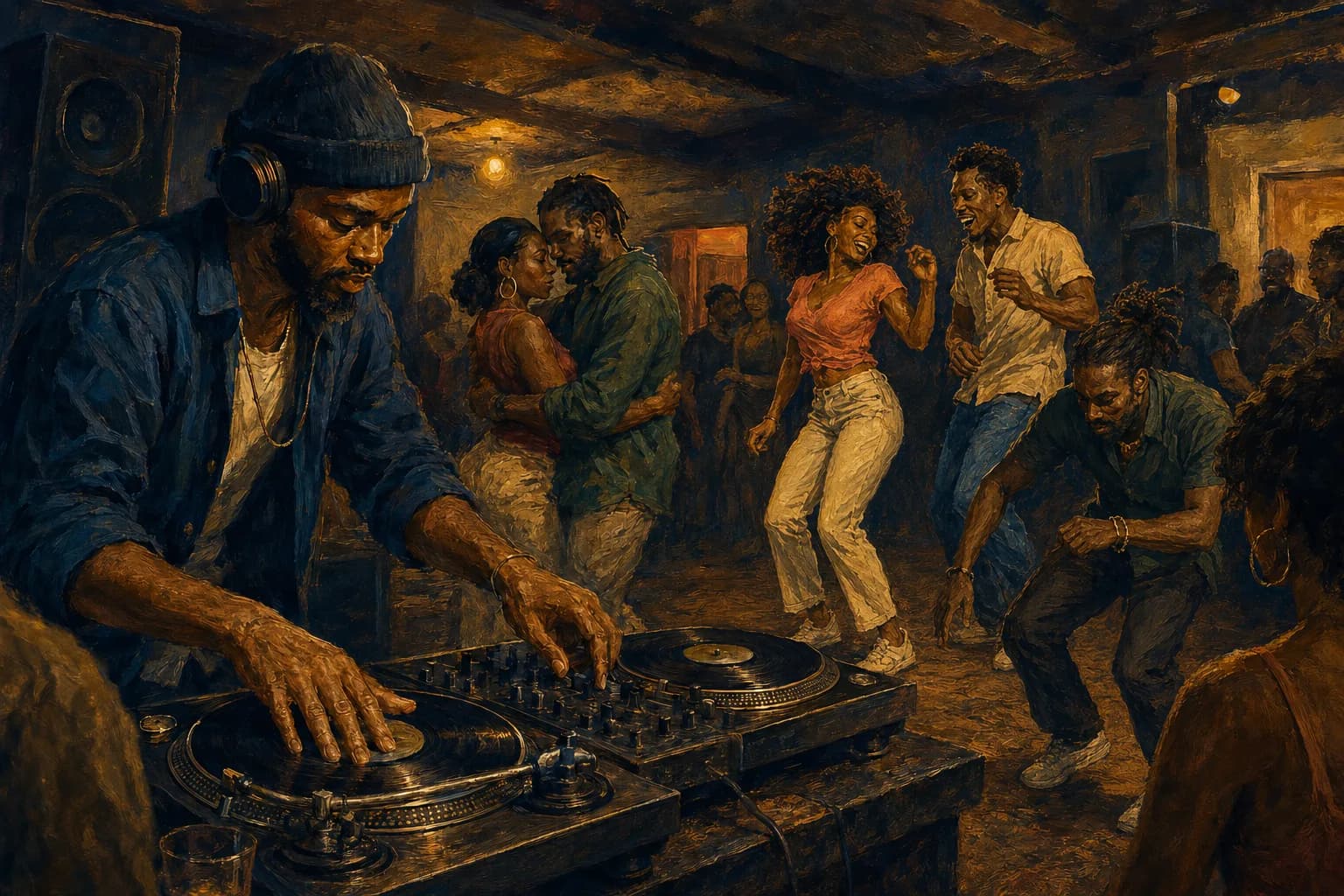
A composite wedding reception in a hotel ballroom far from the Caribbean — Ohio, say, or Oslo. The DJ, playing strictly chart pop, drops Rihanna's "Work," and then Drake's "One Dance," and then Ed Sheeran's "Shape of You," and the dance floor of aunties and office colleagues moves happily through all three without the faintest idea that they have just spent twelve minutes inside Jamaican rhythm. Several rhythmic ideas moving through that ballroom were developed, refined or popularized through Kingston studios and dances; the vocal cadences are patois-inflected even from mouths that have never spoken patois; the resulting pop language carries Jamaican influence even when producers market it under broader labels. Dancehall is in the room, uncredited, running the party — which is, for better and worse, how dancehall has run global pop for four decades.
The claim is not that dancehall influenced pop once, back when. The claim is still, present tense, and the evidence is everywhere you dance.
Not a genre — a system
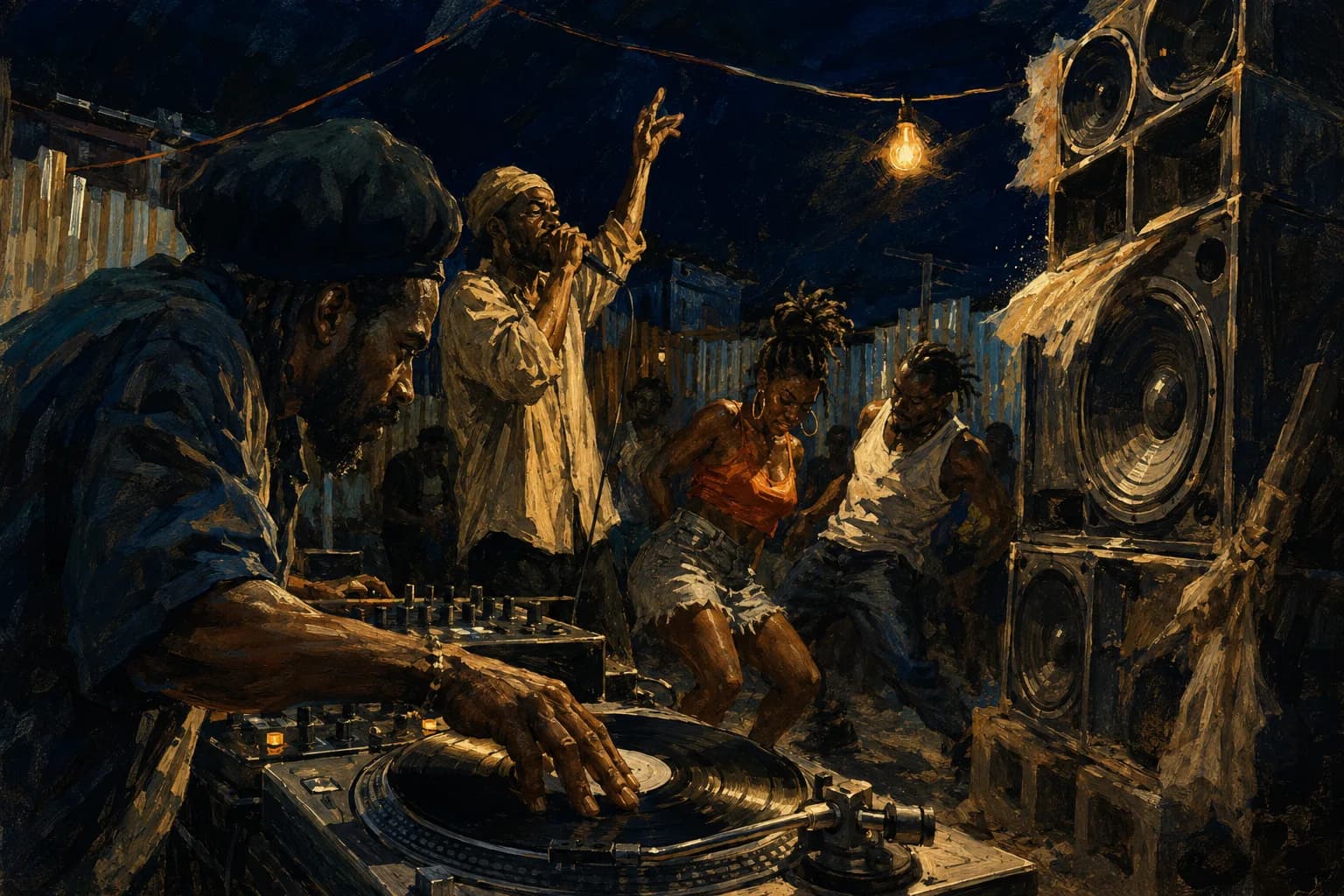
Dancehall resists being described as merely a genre because it never was one. It is a whole cultural apparatus: a way of making music (the riddim system, where one instrumental hosts dozens of competing vocal versions), a way of presenting it (the sound system — towering speaker stacks, the selector's craft, the deejay riding the rhythm live), a competitive economy (clashes, dubplates, the constant pressure to answer the moment), a dance culture that names and exports new moves at a pace no other scene matches, and a dress code, a slang, a posture. When dancehall travels, all of it travels — the drums and the attitude, the cadence and the confidence.
It grew from the sound system culture of the 1950s onward — Coxsone Dodd's Downbeat, Duke Reid's Trojan — and from the mic men who talked over instrumentals for the crowd. U-Roy, the pioneer too many casual fans have never heard named, took that toasting and made it an art form around 1970, effectively demonstrating the rap record before rap records; when U-Roy's students' students turned up in the Bronx, hip-hop was among the results. Dancehall proper hardened in the late 1970s and then detonated in 1985, when Wayne Smith's "Under Mi Sleng Teng," built by King Jammy on a preset Casio rhythm, dragged the music into the digital age overnight — hundreds of versions on that one riddim, and a template for electronic dance music production that the world is still using.
From there the export lineage runs through eras: Yellowman ruling the early 80s; Shabba Ranks taking dancehall to Grammy stages in the early 90s; Buju Banton, Beenie Man and Bounty Killer defining the 90s; Sean Paul carrying it to global number ones in the 2000s; Vybz Kartel rewriting its lyrical DNA from the 2000s onward; Spice, Popcaan and a streaming-era generation carrying it now.
The receipts
"Still shapes" is a claim that should be paid in evidence, so here is a sample of the ledger.
Start with dembow. In 1990, Shabba Ranks recorded "Dem Bow" on a Bobby Digital riddim; that drum pattern — boom-ch-boom-chick — became one important source in the development of Puerto Rican underground music and the dembow pattern central to reggaeton, the rhythm under a vast body of reggaeton and Latin pop. Every time "Despacito"-descended drums move a stadium, a Kingston pattern is being played.
Then the 2000s crossover wave: Sean Paul's "Get Busy" and Wayne Wonder's "No Letting Go" (both 2002–03) rode Steven "Lenky" Marsden's Diwali riddim to the top of American charts — a pure riddim-system product succeeding on pop's home field. A decade later, pop absorbed the sound so thoroughly it stopped labeling it: Major Lazer built a global brand on dancehall's chassis; Rihanna's "Work" (2016) was dancehall to its bones; Drake's "One Dance" and "Controlla" (2016) borrowed the bounce and the patois; Justin Bieber's "Sorry" (2015) and Ed Sheeran's "Shape of You" (2017) ran chart-topping laps on rhythms the industry took to calling, with magnificent evasiveness, "tropical house." And beyond the drums: Afrobeats' global rise carries deep dancehall cross-pollination, Lagos and Kingston in constant studio conversation; dancehall moves seed short-form video dance culture; the deejay's cadence lives inside grime, inside dembow's Dominican descendants, inside half the toplines on pop radio.
The credit problem
Which brings the honest paragraph, delivered as accounting rather than grievance. Influence and recognition have never been paid at the same rate. When the sound crossed over under euphemisms — "tropical," "island-flavored" — the naming mattered, because names route credit and credit routes money. Jamaican producers and songwriters have too often watched their patterns become other people's publishing; the riddim system's communal genius fits awkwardly into a royalty architecture built for single-author pop, and the island that invented the modern remix has captured a sliver of the value chain built on its inventions. There have been better recent chapters — direct collaborations, features that name the source, a generation of pop producers who cite Kingston openly — but the gap between how much dancehall the world consumes and how much it acknowledges remains one of pop's standing debts. Respect, in practical terms, is simple: name the source, license the sample, put the originators on the record and the check.
Where to start listening
For the reader who wants the lineage in their ears rather than in prose, five doors in: U-Roy's "Wear You to the Ball" (1970) for the birth of the deejay art; Wayne Smith's "Under Mi Sleng Teng" (1985) for the digital big bang; Shabba Ranks' "Dem Bow" (1990) to hear reggaeton's skeleton in its original body; Sean Paul's "Get Busy" (2003) for the riddim system conquering pop radio; and Spice's "So Mi Like It" (2014) for the modern era's energy undiluted. Play them in order and you can hear forty-five years of the world learning to dance to Kingston.
The point of the whole story is the one dancehall itself has been making since the first sound system strung wire to a speaker box: local confidence, turned up loud enough, becomes global instruction. The ballroom in Ohio never needed to know where the rhythm came from for the rhythm to work. But you, now, know — and once you hear it, you hear it everywhere. That is what "still shapes" means. Not history. Rotation.
Editorial note
LuxTuris original
This is evergreen editorial context from the LuxTuris desk, not live breaking news or invented social proof.