 Food
FoodThe Cup in the Yard: Bush Tea and Caribbean Cultural Memory
Cerasee, fever grass, soursop leaf — a Caribbean household's yard pharmacy is a taxonomy, a dosing tradition, and a diagnostic system, held entirely in memory.
LuxTuris Editorial Desk · May 25, 2026
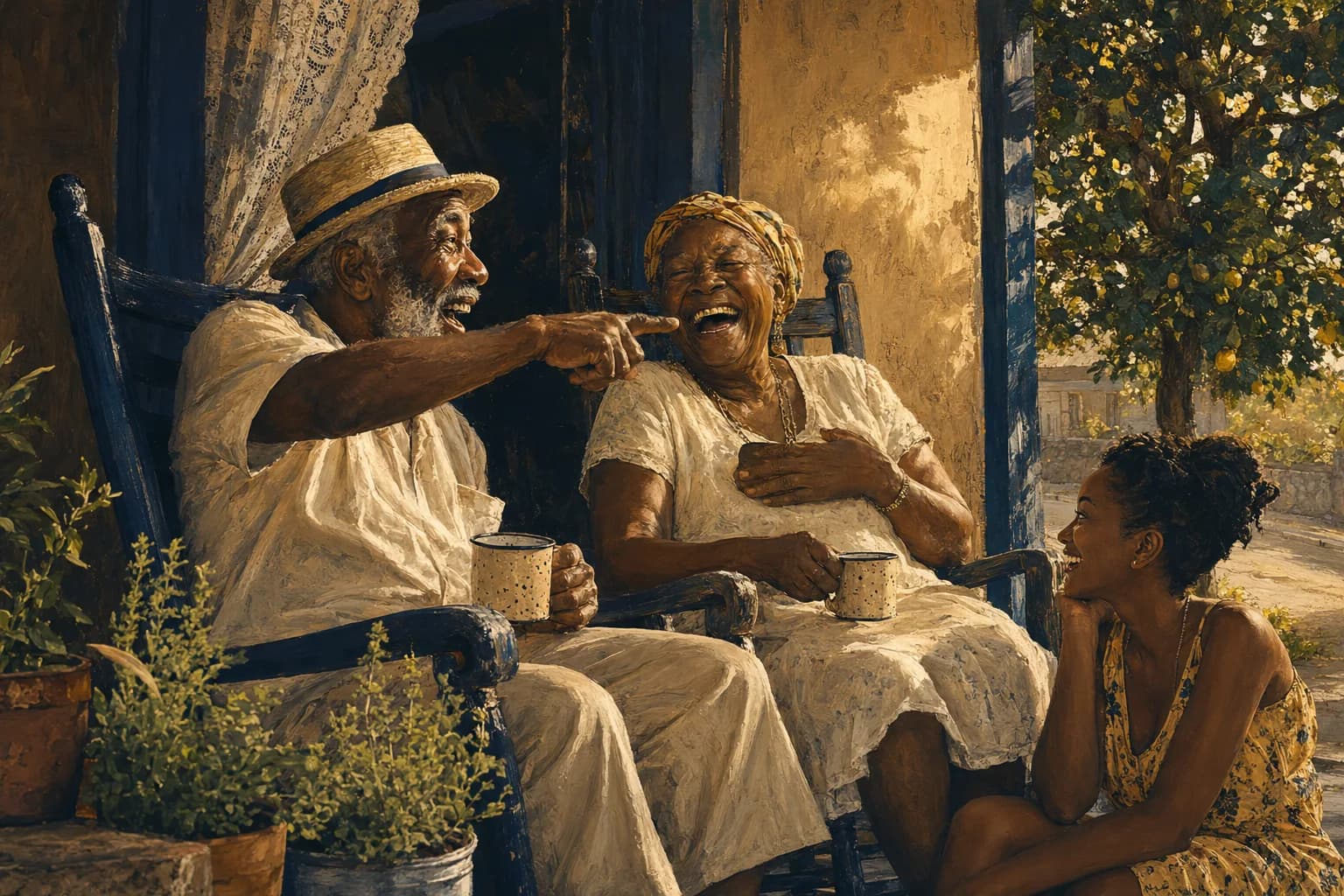
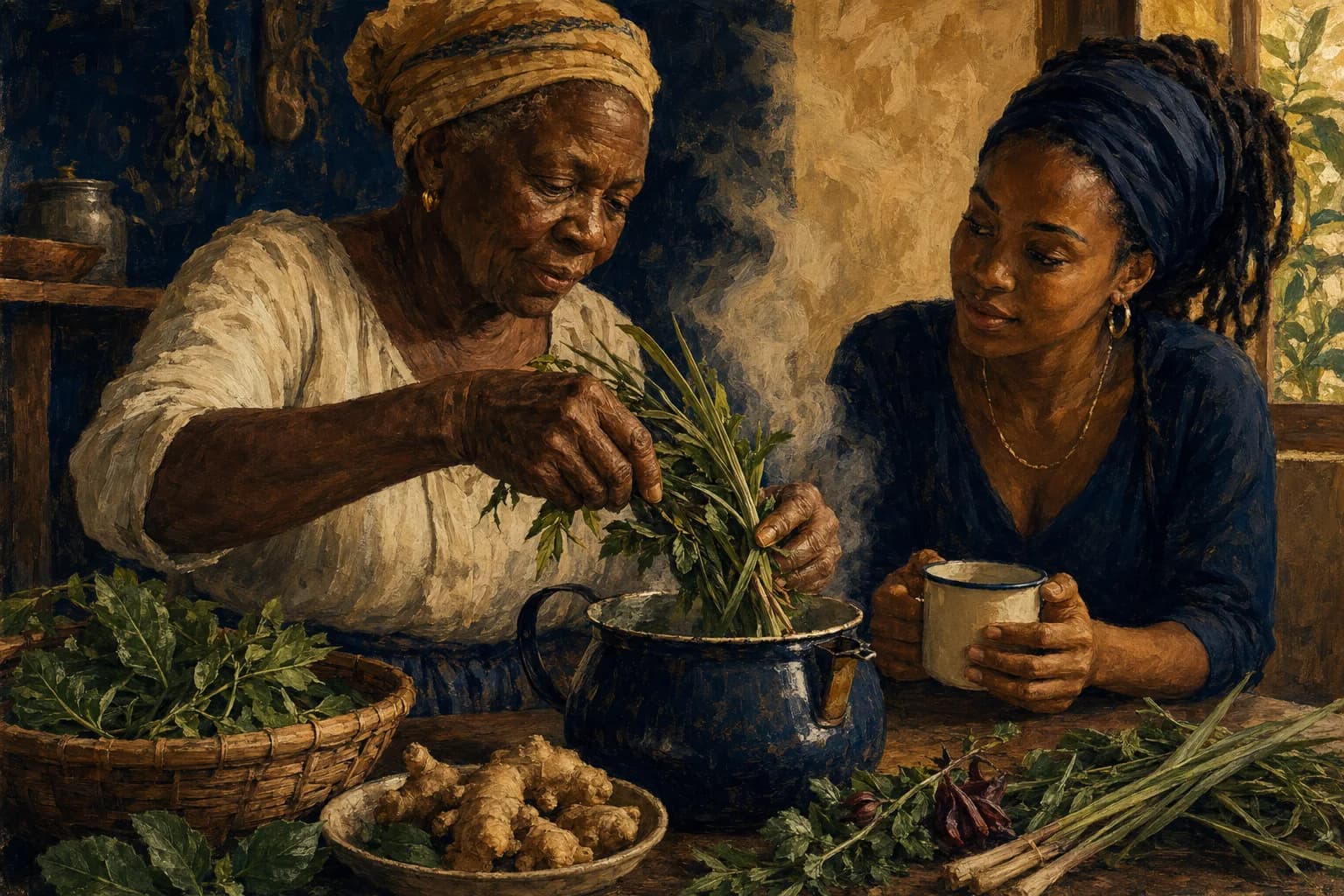
In a composite Caribbean household, someone complains of an unsettled stomach and an older relative reaches first for the yard. Grandma goes out the back — not to the cupboard, to the yard — and comes back with a fistful of cerasee vine, the small leaves and bitter little pods still warm from the sun. It gets rinsed under the pipe, folded into the pot, covered with water, and set to boil while the patient sits at the table looking like a prisoner awaiting sentence, because everyone in this kitchen knows what cerasee tastes like. The tea steeps until it is the color of strong regret. It is poured, unsweetened — sweetening it "kills the medicine," a doctrine that has never once been debated in this household — and set down with a single instruction: drink all of it. The face the patient makes is part of the cure. So is the grandmother watching them make it.
That cup is doing several jobs at once, and only one of them is about the stomach. It is also a lesson, a lineage, and a library — one page of an oral pharmacology that Caribbean families have been keeping, without writing much down, for centuries.
The pharmacy in the yard
Many Caribbean households preserve some version of a plant-based domestic tradition, and the names deserve to be recorded, because the names are the culture.
Cerasee, or bitter melon vine, carries a formidable reputation in folk practice. Claims that it cleans the blood, treats digestive problems or serves as a general wash-out are cultural claims, not medical instructions. Fever grass, which the wider world calls lemongrass, is the gentle one: for colds, for fevers, for the simple civilization of a hot cup in the morning; many households drink it daily the way other nations drink breakfast tea. Soursop leaf is often described in households as a calming or sleep tea, but its effects, interactions and safe use should not be assumed from tradition alone. Mint — often "black mint" or garden mint grown in a paint tin by the kitchen door — settles stomachs and tempers. Ginger, boiled hard, handles nausea, gas, and cold weather in foreign. And behind those five stand the deeper benches: leaf of life for coughs, jack-in-the-bush (guinea hen weed's politer cousin) for colds, lime leaf, guava leaf for the stomach, aloes for the skin and — administered by the truly committed grandmother — for the inside as well.
Notice what this list actually is: a taxonomy, a dosing tradition ("draw it, don't boil it long" for some leaves; "let it boil down" for others), and a diagnostic system, held entirely in memory and speech. Which leaf, for which complaint, prepared which way, by whom. People remember who grew the best mint on the road, which market vendor's bundles were fresh, which auntie's method was the one that worked. The plant knowledge comes attached to people — that is what makes it memory and not merely botany.
The knowledge chain
Trace how anyone comes to know this, and you find the same chain in almost every family. A grandmother learned it in the yard from her own grandmother, absorbing it the way children absorb everything: by being sent to pick the leaf, by watching the pot, by being made to drink the result. Her daughter learned it half-attentively, the way second links in a chain often do — enough to make fever grass, enough to know cerasee's reputation, not enough to identify every bush on sight. And her daughter's daughter, raised in Toronto or South London, knows the names — grew up hearing them — but now types "cerasee benefits" into a search bar at two in the morning, trying to confirm what her grandmother simply knew.
That searching granddaughter is not a failure of the chain. She is the chain, doing what it has always done: reaching back. The instinct to check the bush before the pharmacy, or at least alongside it, survived the Middle Passage, survived plantation medicine, survived migration to cold countries — carried substantially by women, in yards and kitchens, one bitter cup at a time. What has changed is only the reference format.
Alongside, not instead
An honest word here, because this subject deserves plain speech rather than either mockery or mystique. Bush tea is folk knowledge, and folk knowledge sits alongside modern medicine, not in place of it. Many experienced caregivers understood this — the same woman who brewed the cerasee also marched you to the clinic when the situation was beyond the yard, and her wisdom included knowing where that line was. Anyone dealing with real illness, medication, pregnancy, or a sick child should be guided by qualified medical care; a plant's long reputation is not evidence of safety, dosage or suitability, and nothing here should be read as one.
But the reverse mistake — laughing the whole tradition off as superstition — misreads what the cup is for. Some of the yard pharmacy has drawn genuine scientific interest; some of it works by rest, warmth, and being cared for, which are not nothing; and all of it works as culture. The tea says: someone noticed you were unwell, went outside, and made you something with their hands. Clinics are better at many things. They are not better at that.
The bush in the barrel
The tradition emigrated the way everything emigrated: in luggage. Dried cerasee wrapped in newspaper at the bottom of a barrel. Fever grass roots smuggled in a suitcase and coaxed into life in a Brooklyn windowsill pot or, against all climatic advice, a Toronto backyard — dug up and brought inside each winter like a family member who can't take the cold. The Caribbean grocery aisle abroad now sells the whole formulary in teabags and dried bundles: cerasee boxed and branded, soursop leaf by the ounce, a convenience the grandmothers regard with the suspicion they reserve for all shortcuts, but use anyway.
And in the diaspora, the cup changes function. On the island it was medicine that happened to be memory. In foreign it is memory that happens to be medicine — the taste of the yard, the grandmother's kitchen recalled through the sinuses, homesickness treated at its actual site. A second-generation woman in Mississauga brews fever grass on a snowy morning not chiefly for her cold, but because the smell puts her briefly back on a veranda she visited at eight years old.
That is the true active ingredient, and it is why the tradition will outlive every generation that swears the next one is losing it. The cup is memory you can hold with two hands while it is still too hot to drink. Bitter, usually. Unsweetened, on principle. The taste carries memory, but memory is not dosage advice.
Editorial note
LuxTuris original
This is evergreen editorial context from the LuxTuris desk, not live breaking news or invented social proof.