 Diaspora
The Hustle Is the Institution: Inside the Caribbean Vendor Economy
The vendor economy isn't informal — it's a heritage economy, founded in the Sunday markets of the enslaved and running today on reputation as infrastructure.
LuxTuris Editorial Desk · May 29, 2026
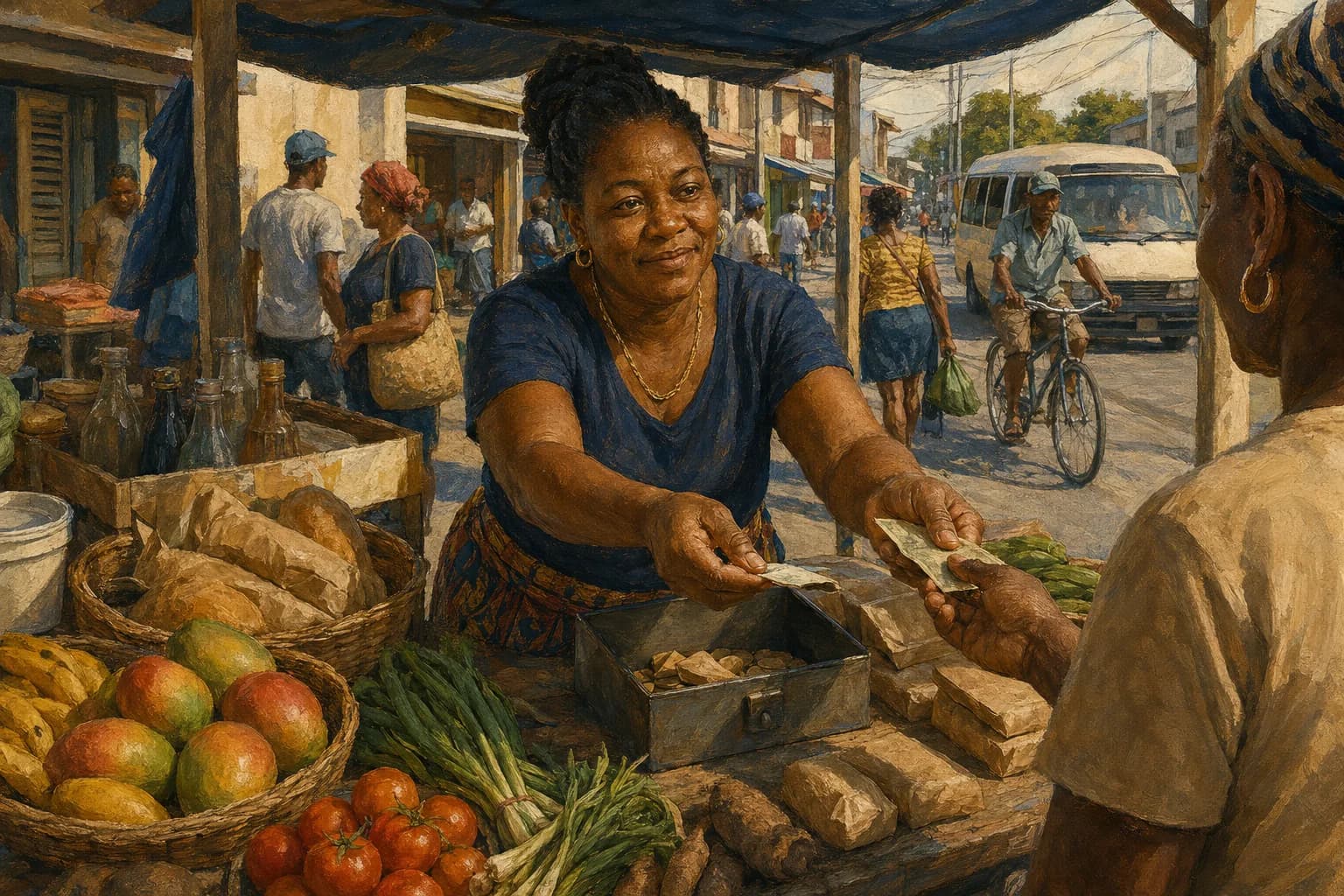
By the time the office workers are at their desks, Miss Elaine has already run a full business day. She is a disclosed composite, used here to illuminate a regional pattern rather than presented as a reported individual. She was at the wholesale market before dawn, selecting by hand; her table — a fixture on this corner so established that directions in the district use it as a landmark — was dressed by seven; her regulars have been served in order of their known preferences, two of them on credit that exists nowhere but in her head and has never once been miscounted. By mid-morning she has extended a loan, called in a favor, taken three orders for the weekend via voice note, dispatched her nephew with a delivery, and assessed a new customer's trustworthiness in the time it took to make change. She has no business plan, no registration, no invoice template. She has something the templates are all trying to imitate: a reputation, compounding daily, on a corner she has held for twenty-two years.
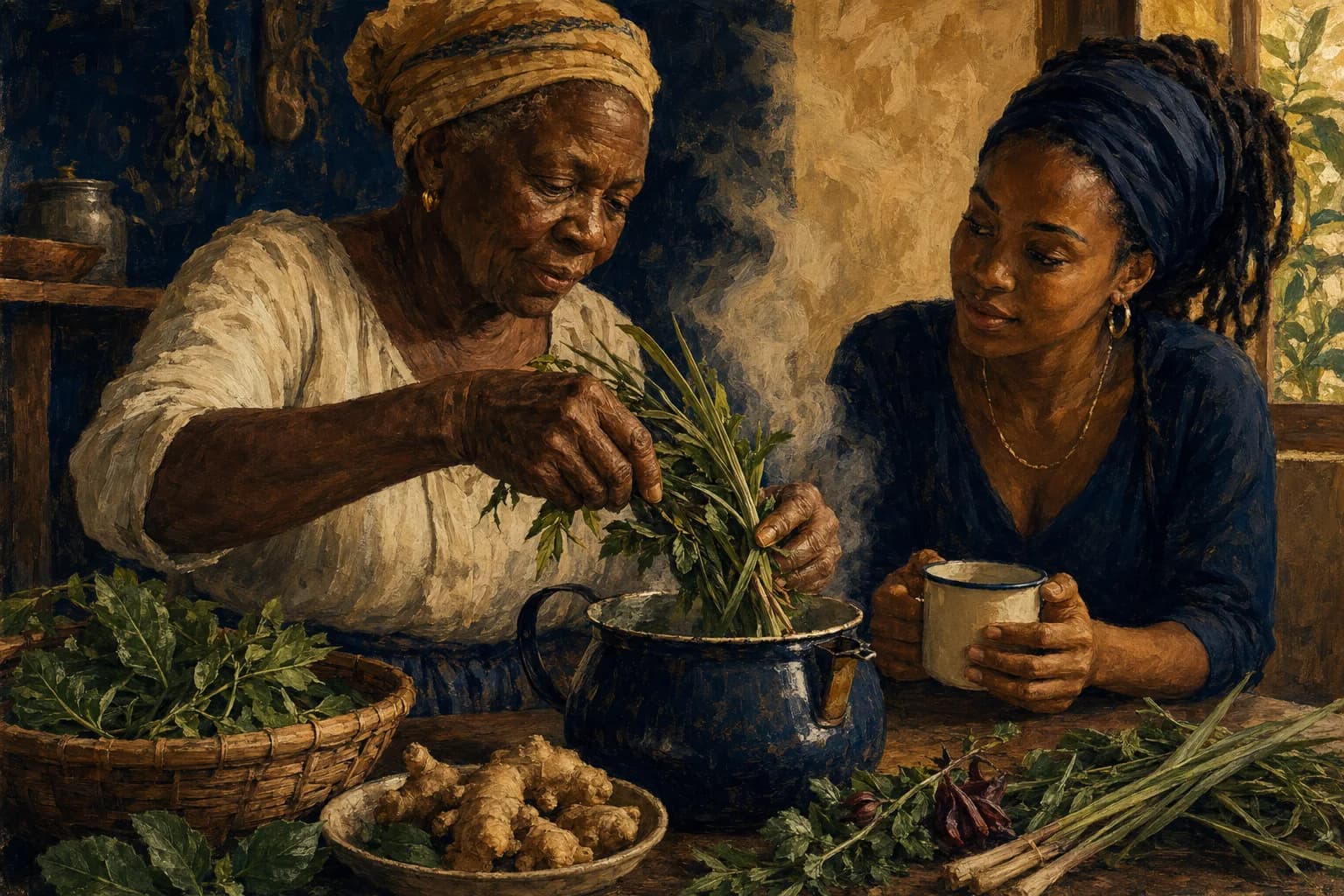
Her methods belong to real vendors whose businesses operate through reputation, memory and community trust. The vendor economy — the food seller, the seamstress, the barber, the event decorator, the cake lady, the man who fixes phones from a stall — is routinely described as "informal," a word that manages to be both technically accurate and completely wrong. The word informal describes its relationship to registration and regulation, not the discipline of the work. Across the region, these businesses preserve commercial practices with deep historical roots. It just keeps its systems in a different place: in memory, in relationships, in reputation. This piece is about the institution itself — where it came from, how it actually works, and why "skill, reputation and hustle before formal systems" is not a deficiency awaiting correction but a heritage worth naming.
Descended from the Sunday market
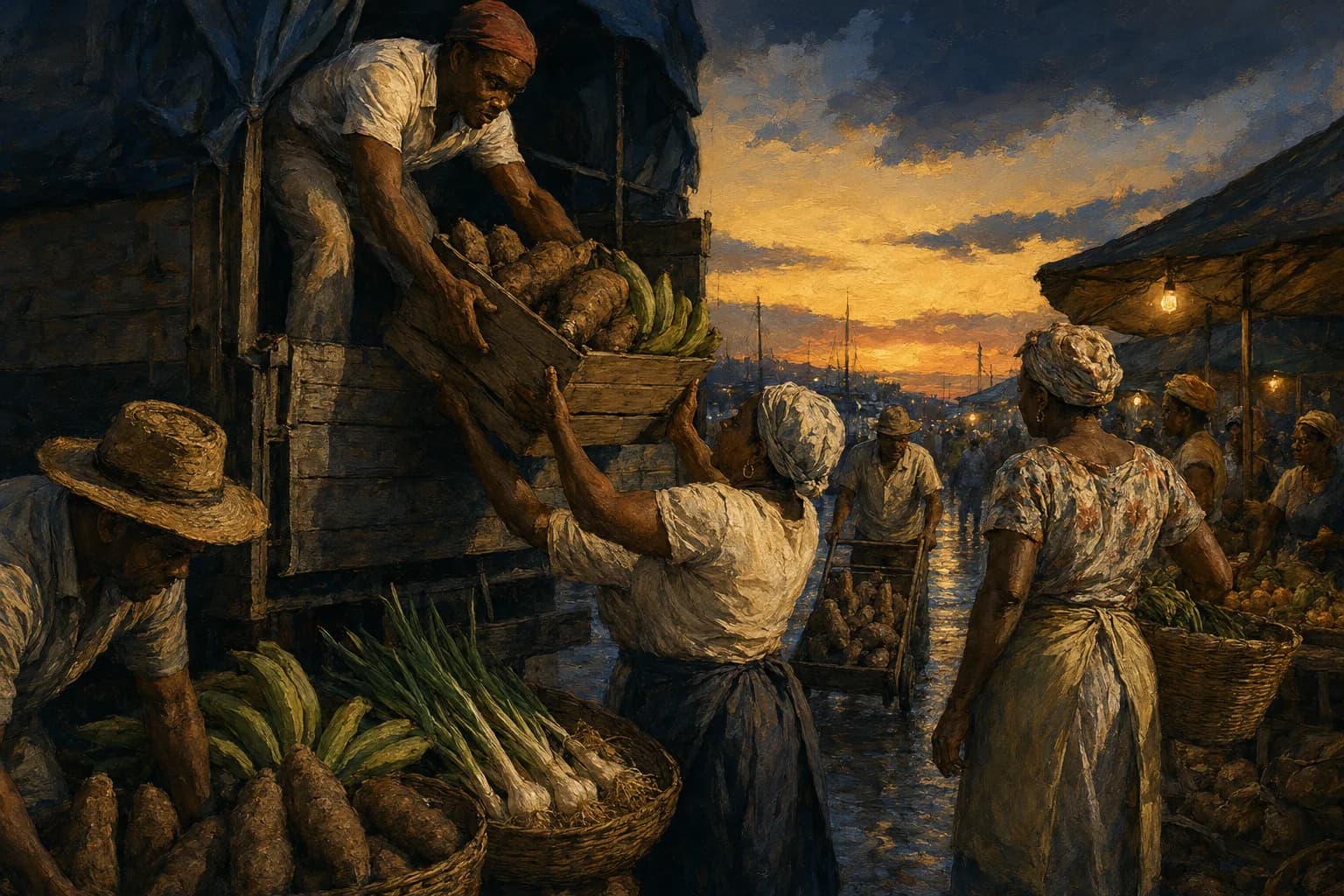
The lineage is precise. The Caribbean's enterprise tradition was founded by people who were legally barred from the formal economy entirely: enslaved people whose one commercial foothold was the Sunday market, where surplus from provision grounds could be sold. Women became central to these internal trading networks, building forms of commerce through baskets, footpaths, memory and hard-won access to cash. The higgler tradition that grew from it became the islands' actual internal economy: the human supply chains that fed the towns, the market women whose earnings bought cloth, land, education and occasionally freedom itself. Every generation since has extended the line — the post-emancipation artisans and shopkeepers building livelihoods the plantation economy never intended them to have; the twentieth century's traders flying to Panama and Miami with empty suitcases and returning with inventory; today's caterer taking orders through a chat thread. The through-line never breaks: locked out of the formal system, Caribbean people repeatedly built parallel ones — faster, more personal, and running on an asset no bank could issue or repossess.
Trust as infrastructure
Because that is the tradition's core technology: trust, operating as infrastructure. Where formal economies run on contracts, credit scores and collections departments, the vendor economy runs on reputation — a distributed, community-maintained ledger of who delivers, who pays, whose word holds. Consider what it actually does. The "trust" — goods advanced against payday, extended on judgment and enforced by nothing but the shame of a small community's knowledge — is a functioning credit system with underwriting standards (the vendor's read of character) and consequences (a spoiled name travels faster than any bureau report). The partner — sou-sou, box hand, meeting turn, every island has its word — is community banking in its purest form: a circle of people paying a fixed "hand" into a rotating pot, each taking a turn to receive the lump sum, no interest, no paperwork, no institution — capital formation by pure mutual trust, and the quiet source of an untold number of down payments, shop stocks, plane tickets and school fees across two centuries and every diaspora city. The referral network — who does your cakes? take her number — is the marketing department. The known corner, the established stall, the twenty-two years: that is the brand equity. None of it is written down. All of it works.
The event economy, and the hustle's range
Watch the system surge and you see its real capacity. A wedding, a funeral, a christening, a carnival season — each one mobilizes a whole ecosystem of small operators who assemble like a production company and dissolve by Monday: the caterer and her sister's daughters, the decorator, the DJ, the tent man, the cake lady, the seamstress doing five dresses in a week, the drivers, the photographer. Coordination happens through relationships and voice notes; quality is enforced by the fact that everyone will see everyone again at the next function; payment terms flex around the community's real cash flow. Carnival scales this to a national level — the costume builders, the vendors, the promoters — a seasonal economy of thousands of micro-enterprises delivering, on deadline, one of the most complex cultural productions on earth. The formal sector often depends on this flexible network without adequately recognizing, financing or protecting the people who sustain it.
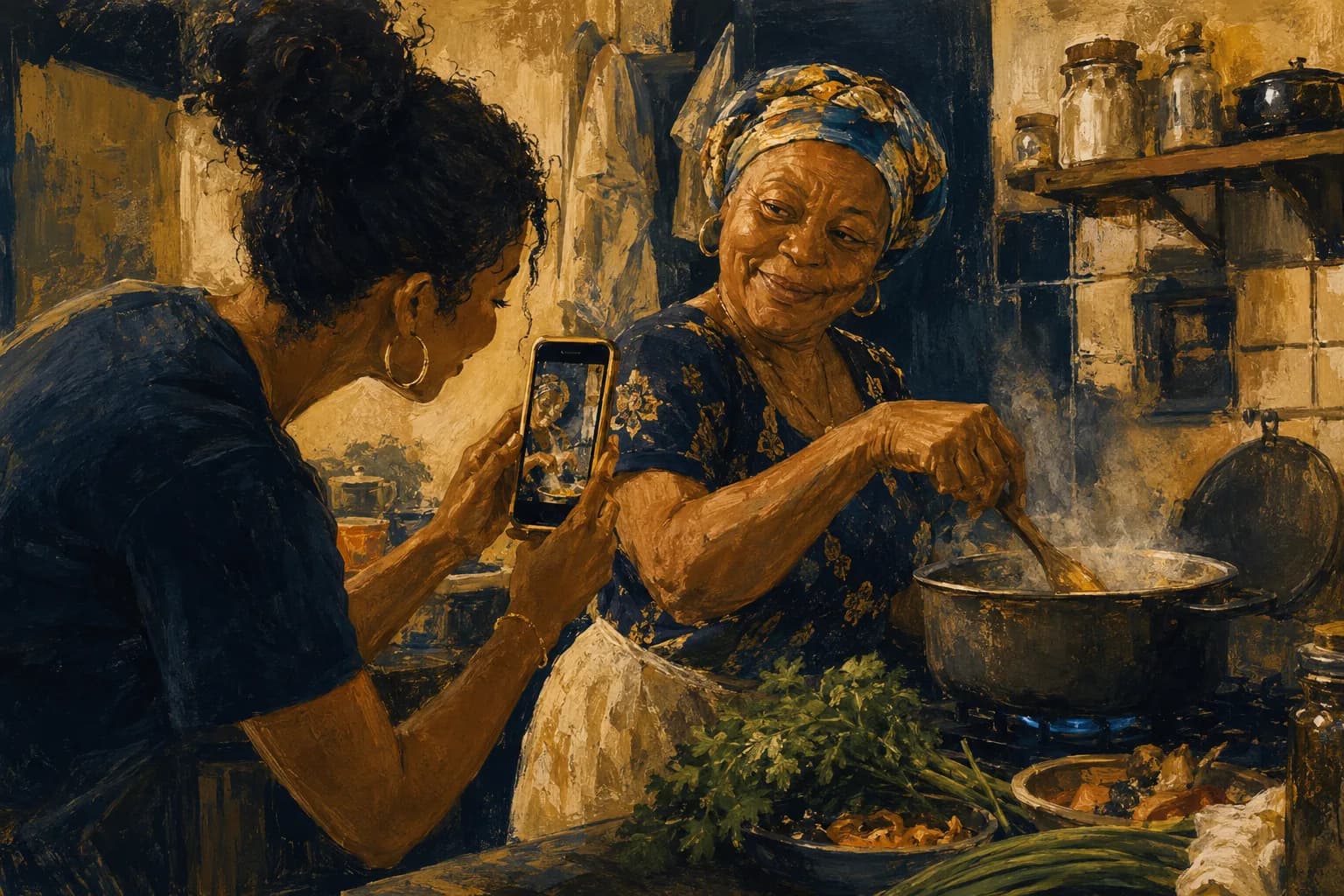
And "hustle" here deserves rescuing from its slacker connotations, because in Caribbean usage it is closer to a virtue: the ability to see an opening and fill it, to run three income streams because one is never safe, to turn a skill — any skill — into a livelihood without waiting for permission or employment. It is the region's inherited answer to economies that were never designed to include its people, and it emigrated intact: the diaspora's hairdressers-from-home, wedding caterers, barrel shippers, party promoters and weekend seamstresses are the same institution operating at colder latitudes, still running on the same ledger of reputation.
Structure that serves the tradition
Now the honest turn, because romance is not respect. The tradition has costs, and its practitioners know them best: the mental load of holding an entire enterprise — every order, every debt, every price — in one head; the vulnerability when that one head is sick or grieving; the invisibility to banks and insurers of a twenty-two-year track record that exists nowhere on paper; the business that dies with its owner because the ledger did too. This is where the practical layer belongs — not as a corporate makeover, but as protection for the work. A price list, so quoting stops being renegotiation. A simple record of orders and money in and out, so the week's truth doesn't depend on memory. A customer list that exists outside one phone. These are not impositions of formality on a folk practice; they are the tradition's own values — reliability, reputation, continuity — given a backup copy. The invoice can still be warm. The tracker can still serve a family. Miss Elaine's mental ledger is a marvel; Miss Elaine's ledger written down is a marvel her daughter can inherit.
Name the institution
So land here. The next time the phrase "informal economy" gets applied to the region's vendors, apply the correction: what the Caribbean also possesses is a heritage economy: commercial practice formed across generations, often outside institutions that excluded its participants, founded in the Sunday markets of the enslaved, matured through the higglers and the partner hands, and operating this morning on ten thousand corners and in every diaspora city, on the strength of skill, reputation and trust. It has never needed to be taught how to do business. At most, it deserves what every institution deserves: recognition, protection, and the tools to make sure the ledger — the real one, the one kept in memory and honor — outlives the remarkable people who keep it.
Miss Elaine is packing up. The table comes down in the same order it went up. Tomorrow, before dawn, the institution reopens, carrying forward a commercial inheritance shaped across centuries.
Editorial note
LuxTuris original
This is evergreen editorial context from the LuxTuris desk, not live breaking news or invented social proof.