 Language
What the Village Calls You: Nicknames and Caribbean Memory
Bishop has never preached a sermon in his life — the story behind a Caribbean nickname is an entry in a ledger nobody wrote down.
LuxTuris Editorial Desk · May 10, 2026
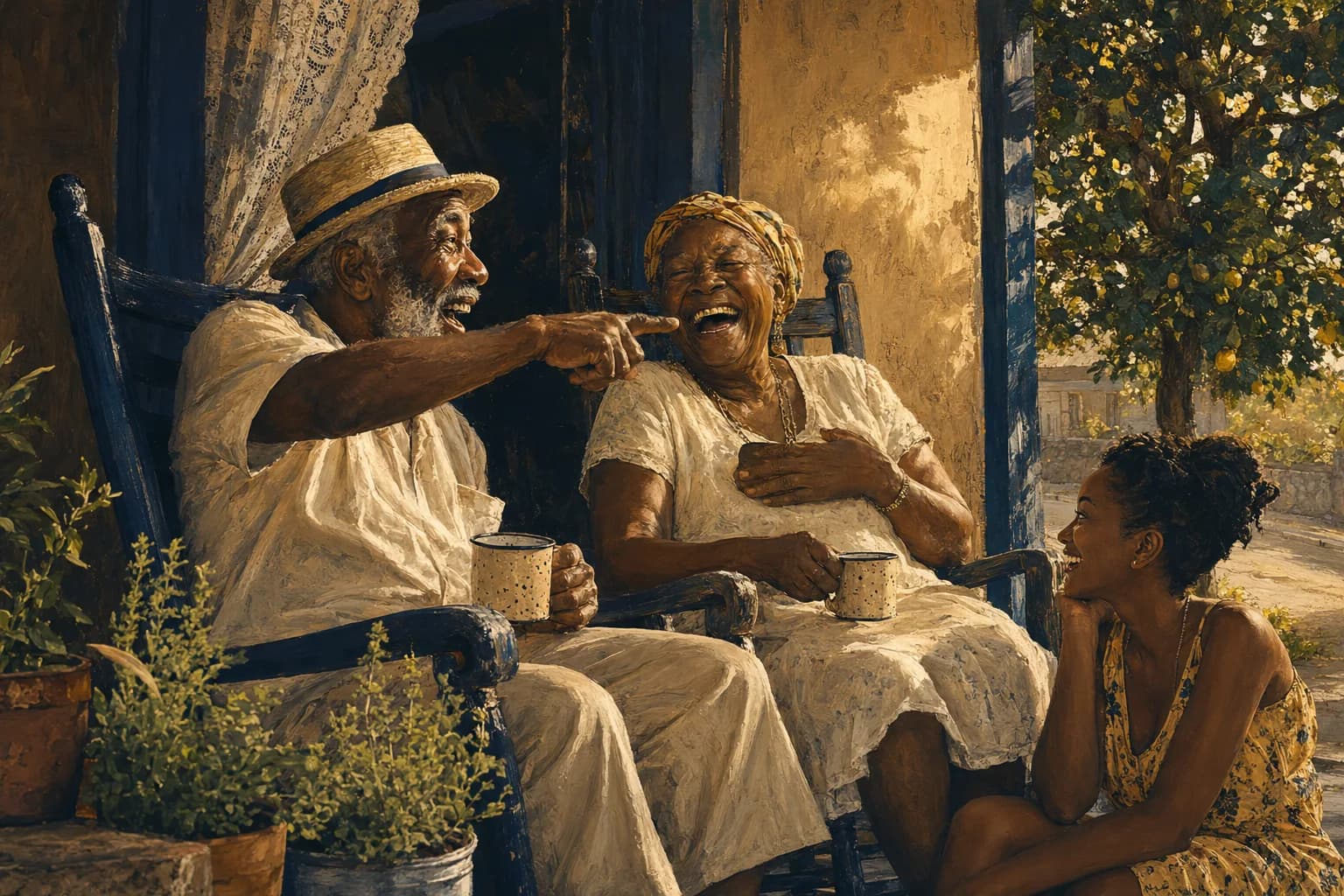
Consider Bishop, a disclosed composite drawn from a regional naming tradition rather than a reported individual. In a village on the north side of an unnamed island, he is a man in his seventies whom everyone, including neighbours, the shopkeeper and children waving from the school van, calls Bishop. He has never held office in any church. He does not preach. If you ask around, most people will shrug: he's Bishop, man, Bishop is Bishop. It takes two weeks and three rum shop conversations to find the origin, held by exactly two people old enough to remember it: at nine years old, at somebody's wake in the 1960s, he stood up on a chair in his school clothes and delivered a dead-serious imitation of the visiting Anglican bishop, complete with the accent and the hand gestures, and the yard laughed until the mourning briefly stopped. Sixty-odd years later, the wake is forgotten, the chair is gone, the actual bishop is long dead — and the record of that one luminous minute is still walking around the village, answered to daily.
That is what a Caribbean nickname is. Not a casual abbreviation, not a term of endearment, though it can be both. It is an entry in a ledger that no one wrote down — a civilization's habit of keeping its records out loud.
The taxonomy of the yard name
Spend time in any Caribbean community and the naming logic reveals itself. The names sound random until you sort them, and then they turn out to be as systematic as a filing cabinet.
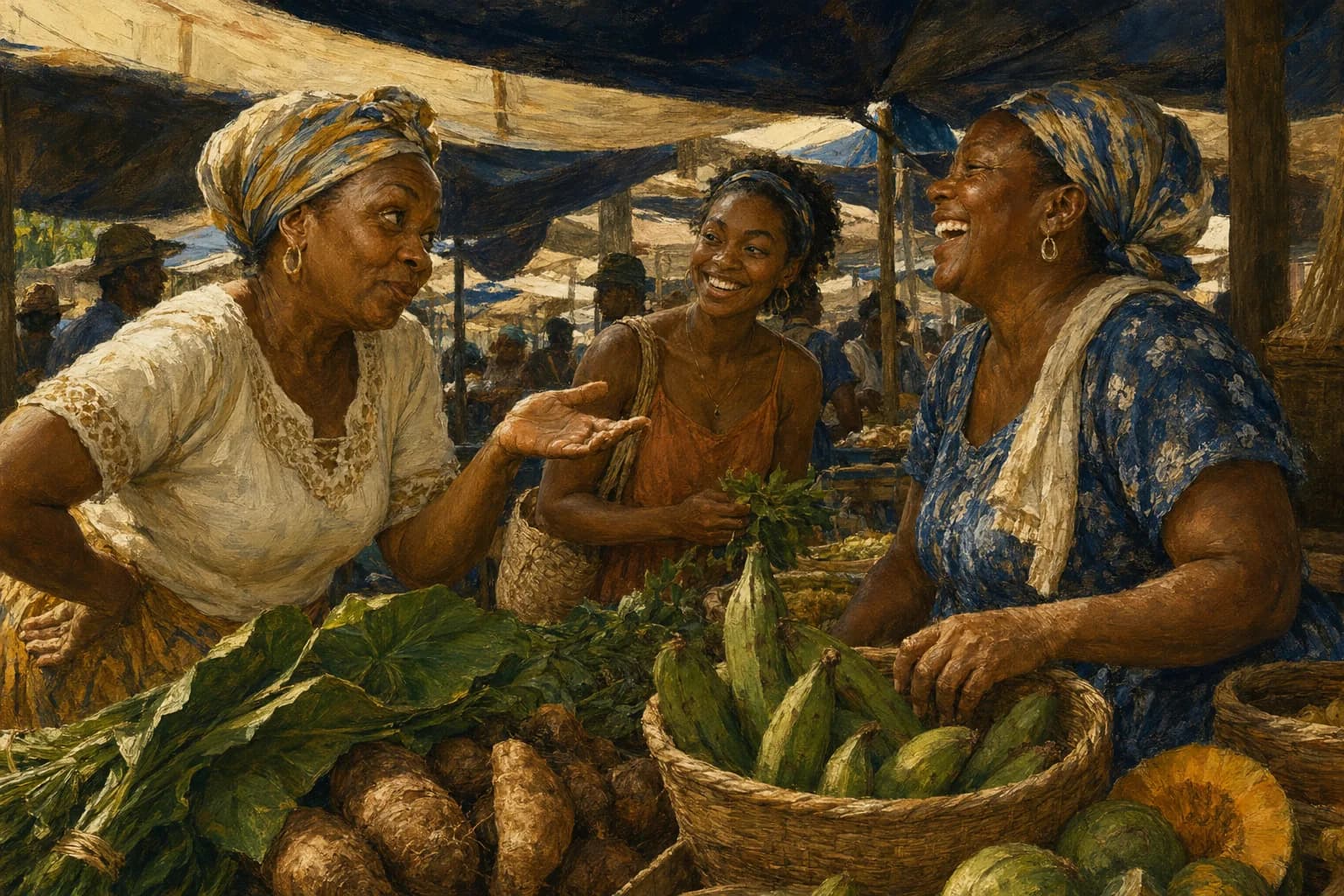
There are the body names, issued with the region's characteristic refusal to flatter: Slim, who may or may not still be slim; Tallman; Redman; Biggs; Shorty, who is sometimes six foot three, because the naming culture enjoys irony as much as accuracy. There are the trade names, which function as a professional directory — Fisherman, Sparks the electrician, Teacher Baird, Dougla the tailor — so that a stranger asking for a service can be routed entirely through nicknames without a surname ever surfacing. There are the place names, which record migration in a single word: Colon, whose grandfather went to Panama for the canal work; English, who came back from London with the accent; Cuba, Curaçao, Brooklyn — whole family histories of movement compressed into what a man is called at the domino table.
Then there are the event names, the Bishops — names that fossilize one moment forever. And the inherited names, where the record-keeping goes generational: Junior's son is also called Junior, and Junior's son's son is Little Junior or Junior Three, a patrilineage kept with more consistency than some parish registers. A woman known as Miss Tiny raises children who are Tiny's boys well into their fifties, her name serving as their address.
The names are affectionate, sharp, funny, occasionally cruel, and almost never chosen by their owners. That is part of the system's integrity. You do not get to write your own entry in this archive. The community observes you, decides what it saw, and files you accordingly.
An oral census
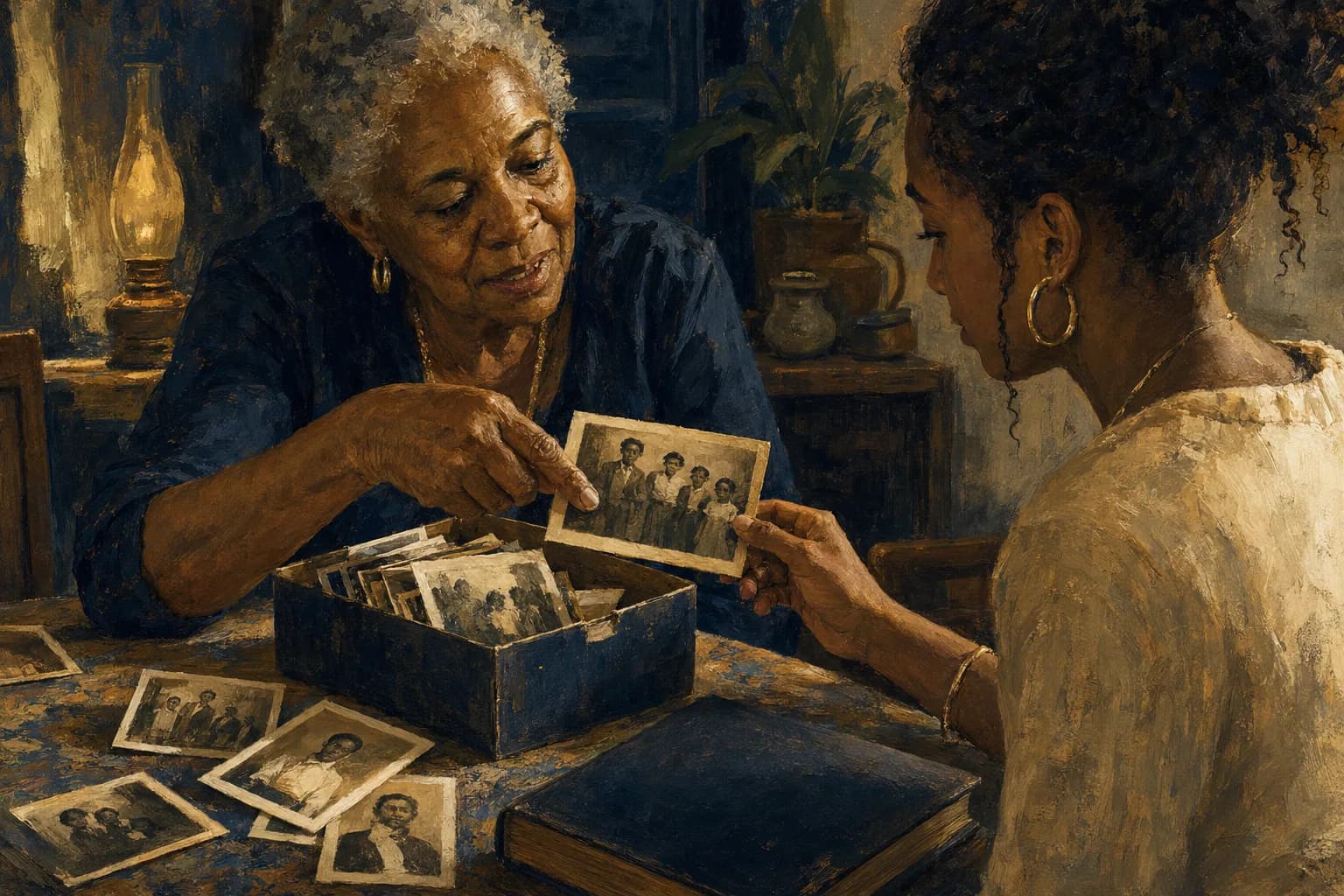
Read a village's nicknames all together and you are reading its history — who did what, who came from where, who resembles whom, what happened that year. It is an oral census, updated continuously, backed up across hundreds of memories, and searchable by anyone who knows how to ask.
This is not an accident of charm. It is a record-keeping tradition with deep roots. Caribbean societies were built by people whose official records were catastrophically bad on purpose — people renamed at will by enslavers, entered into ledgers as property, their actual histories deliberately unwritten. In that world, the community's own naming became a parallel registry: the names people called each other, as opposed to the names imposed on them, held the real information. Who your people were. Where you came from. What you were known for. The habit of trusting the spoken record over the official one is centuries old, and it survives today in the simple fact that a government name, in much of the Caribbean, is the least used and least informative name a person has.
Hence the two-name life that nearly every Caribbean person navigates: the government name, deployed for school registration, bank business, and trouble — a child who hears their full government name called across the yard knows precisely how much trouble — and the yard name, which is the name for actually existing. The two run in parallel for decades, often without intersecting, until the one occasion that famously merges them.
The funeral. Every Caribbean person knows this moment, and it is so universal it barely needs describing, only naming: the church is full, the program is printed, and half the congregation is leaning toward the other half whispering who is Cecil Augustus Thompson? — because the man they knew, loved, owed money to, and drank with for forty years was named Bandy, and no one present has ever heard him called anything else. The government name gets the headstone. The yard name gets the grief. The distribution tells you exactly which record the community considered real.
What doesn't emigrate
Here is the quiet loss inside Caribbean migration that rarely makes the lists of things left behind: the yard name usually stays at the airport.
A man called Bull Dog for fifty years in Portland becomes Mr. Nathaniel Grant in a Birmingham factory, and there is no mechanism to transfer the name, because the name was never his — it was the village's, held in trust, and it does not work without the village to say it. His English coworkers, his children's teachers, eventually even his grandchildren know only the government name, the flat one, the one that carries no story. The nickname survives only inside the diaspora pocket — the association dance, the barrel-packing session, the phone calls home where a sister still calls him what he actually is. Second-generation kids sometimes discover, in their twenties, that their sober churchgoing grandfather is known across an entire Jamaican district as Wappy, and that there is a story, and that the story is spectacular, and that nobody thought to mention it.
This is why the flattening of the yard name in foreign is not a small thing. When the name doesn't travel, the entry in the ledger doesn't travel — the wake, the chair, the bishop imitation, all of it stays behind, held by fewer and fewer people.
The record that outlives the person
There is one thing the oral archive does that paper cannot. Long after Bishop is gone — after the funeral where a churchful of people learn, blinking at the program, that his name was Winston — the village will keep saying it. Give the parcel to Bishop's daughter. That is Bishop's old land there. You know whose grandson that is? Bishop's. The name will go on being spoken by people who never learned the wake, the chair, or the imitation, carrying its story in sealed form, the way a word carries its etymology whether or not the speaker knows it.
A document can burn, a registry can flood, a headstone can wear smooth. But a name that a community decided to keep saying is backed up in every mouth that says it. That is the Caribbean habit: when the official record could not be trusted, people made themselves the record — and it turns out a well-made nickname, lovingly maintained, is one of the most durable storage formats human beings have ever devised.
Editorial note
LuxTuris original
This is evergreen editorial context from the LuxTuris desk, not live breaking news or invented social proof.