 Diaspora
The Phone Is the New Veranda: Caribbean Creators Take the Lens
A forty-second video of a woman dismantling saltfish reaches a diaspora comment section that stacks flag emojis from six countries — the recognition engine behind Caribbean creators.
LuxTuris Editorial Desk · May 24, 2026
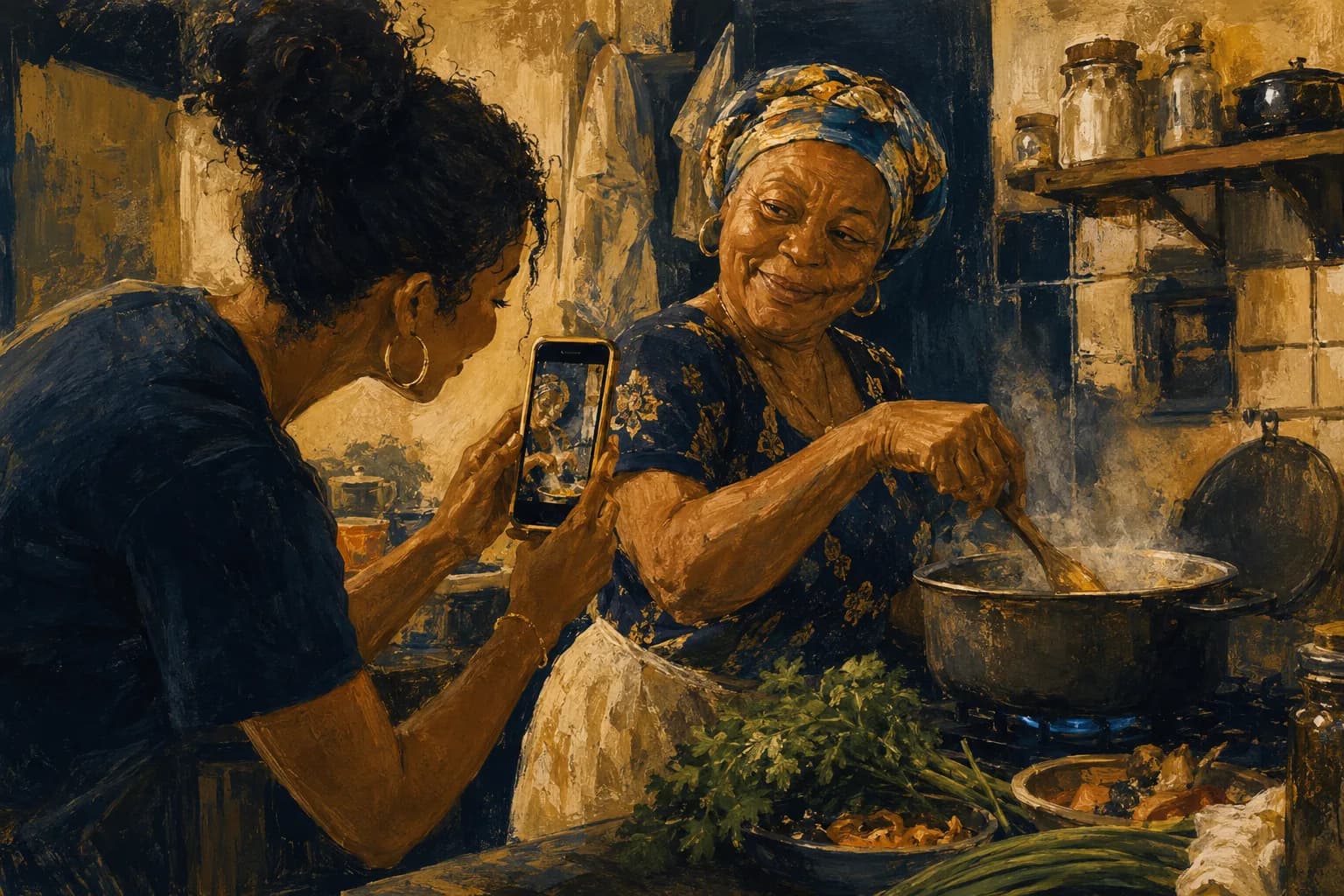
Consider a composite drawn from a familiar genre of Caribbean food video. It lasts forty seconds. A woman in her kitchen somewhere in the islands is dismantling a piece of salted codfish with her hands while delivering a monologue — half recipe, half sermon, entirely in her own accent, no subtitles, no concessions — about people who commit crimes against saltfish. Within days, its imagined comment section resembles a family reunion conducted among strangers across several countries. Flag emojis stack in rows: Jamaica, Trinidad, Guyana, Haiti, Grenada, Vincy. And scrolling down, the same comment repeats in a hundred variations, from Brooklyn and Birmingham and Brampton and Berlin: why is this EXACTLY my granny. The hand on the hip took me OUT. I can smell this video. Called my mother immediately.
Something is happening in that comment section that deserves more attention than the word "viral" gives it. A local perspective — one kitchen, one accent, one uncompromised way of being — has traveled across an ocean and landed, with pinpoint accuracy, in the chest of a diaspora. The rise of Caribbean digital creators is the story of that mechanism, and of what it changes about who gets to show the world the Caribbean.
The recognition engine
Understand first why the diaspora is the engine of this wave. Scattered across the cold cities is an audience of millions carrying a very specific hunger: not for information about home, but for the texture of it — the cadence, the kitchen sounds, the exact tilt of an auntie's head before a verdict. For the first generation, a creator's video is a phone call they didn't have to schedule. For the second generation it is something even more valuable: verification. The child raised on secondhand island — the stories, the Sunday food, the discipline — watches a creator and sees the source material confirmed: so it's not just my family; it's a civilization.
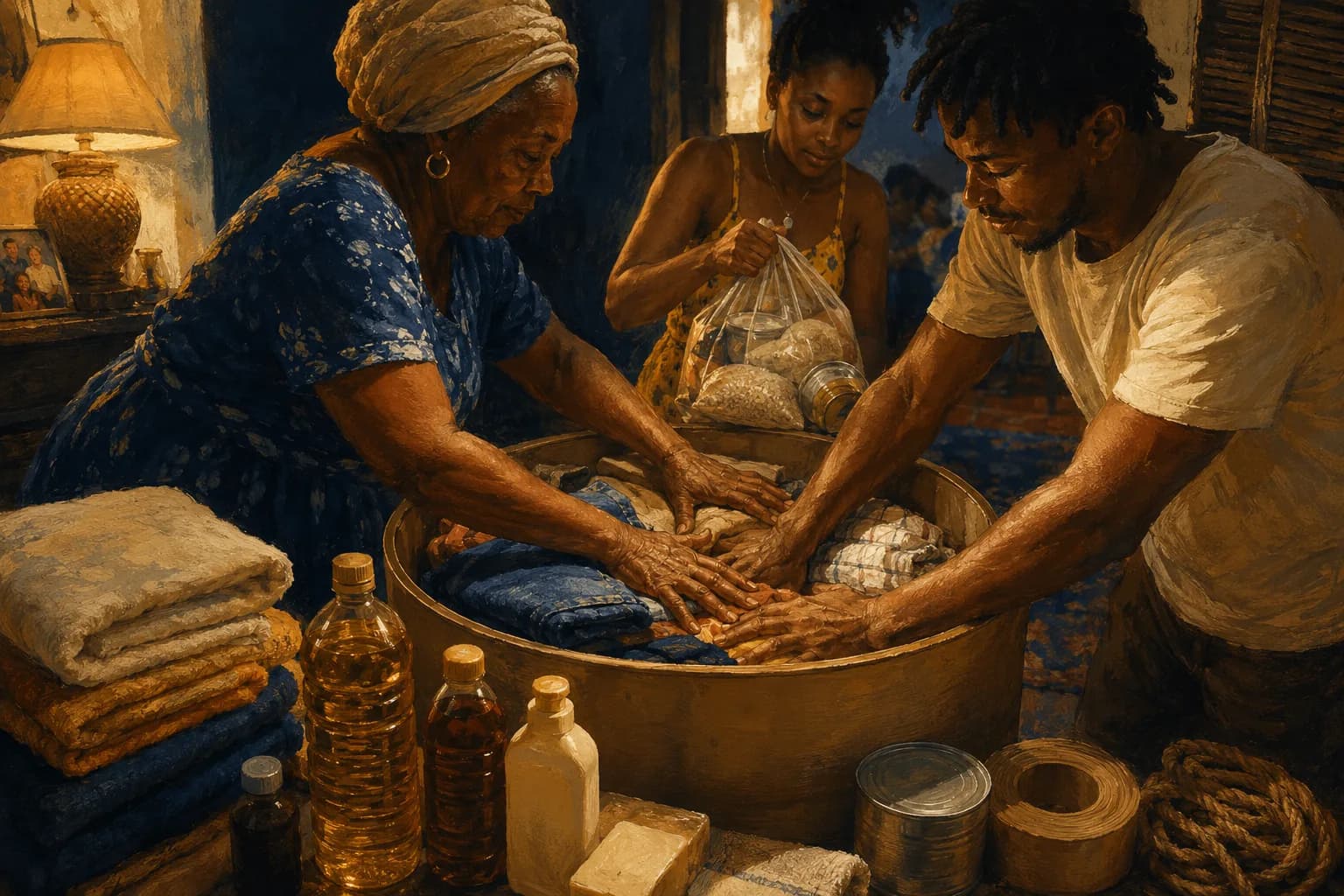
That is why the algorithm, of all unlikely things, has become a kind of barrel. The barrel shipped home comforts to the islands; the feed ships island texture from them — a daily, ambient supply line of home, arriving on the same device as everything else. Homesickness, which used to be managed annually by a flight, is now managed in forty-second doses. And the creators know exactly which nerve they hold: the highest compliment in their comments is never "funny" or "beautiful." It is accurate.
The archetypes of the wave
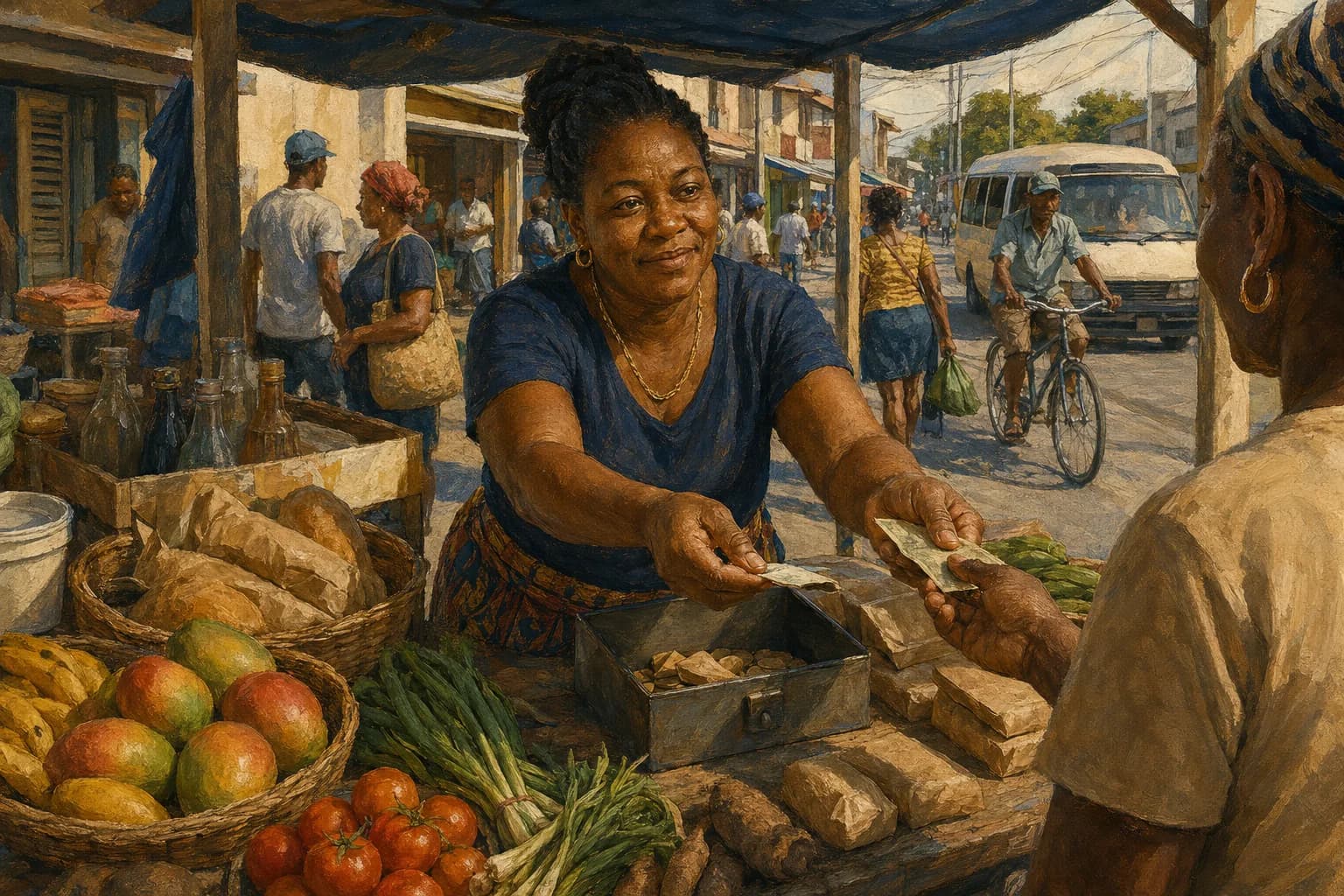
The wave has recognizable species, worth describing concretely. The food creators: the kitchen-based storytellers for whom the recipe is a delivery vehicle — the real content is the commentary, the technique inherited from a named grandmother, the running war against inauthentic versions of national dishes. The skit makers: the comedy engine of the movement — one performer playing the entire family (the mother, the auntie at church, the uncle with opinions about your degree), compressing a culture's social dynamics into characters so precise the diaspora tags its actual relatives. The language creators: the accidental linguists — teaching patois phrases, comparing island accents, decoding proverbs — running the largest informal creole classroom in history for a second generation that understands but hesitates to speak. The carnival and event vloggers: the road documentarians, whose costume try-ons and fete reviews function as both diaspora travel-planning infrastructure and a year-round advertisement for the season. The island-life documenters: the ones simply filming the everyday — the market run, the beach the tourists don't know, the rain on a zinc roof — whose comment sections fill with people who left forty years ago, typing through something heavier than nostalgia.
Collectively, these creators perform some of the cultural, educational and promotional work associated with tourism boards, ministries and language institutions — doing, from bedrooms and kitchens, work that institutions budget millions for, generally without being asked and entirely without being funded.
The honest economics
Which is the paragraph this piece owes its subject. The visibility is enormous; the infrastructure underneath it is not. Platform monetization has historically treated the region as an afterthought — creator funds and ad-revenue programs rolled out to the US and Europe years before (or instead of) the Caribbean, meaning an islands-based creator could rack up millions of views that paid, directly, nothing. Payment rails, brand-deal markets, and the professional scaffolding of the creator economy all run thinner in the region: the Kingston or Castries creator competes globally for attention and locally for a fraction of the resulting money. The workarounds are the familiar Caribbean ones — ingenuity and hustle: merchandise, cooking classes, patron models, diaspora-facing products, brand work with the regional companies waking up to the reach. Some creators break through to real businesses. Many more supply the world's feeds with premium culture from an economic position their view counts flatly misrepresent. The wave is real; the water under it is shallower than it looks — and any honest celebration of Caribbean digital creativity has to hold both facts at once.
Who holds the camera now
Here is what the whole phenomenon changes, and it is not small. For most of recorded history, the Caribbean was depicted — by the colonial illustrator, the foreign correspondent, the travel brochure, the documentary crew that flew in, shot the poverty or the paradise (never the Tuesday), and flew out. The islands were subject matter. The lens belonged to someone else, and the lens had appetites: crisis for the news, fantasy for the tourists, and precious little in between.
The phone flipped the lens. The person holding the camera now is inside the culture — filming the Tuesday, the granny, the panyard rehearsal, the market negotiation — and the world's picture of the Caribbean is, video by video, being repainted from the inside out. Foreign audiences meet the region's ordinary genius instead of its extremes; diaspora audiences get their memories confirmed and their children get sources; and the islands' own self-image compounds, because there is real power in watching your unperformed daily life rack up two million delighted views. Representation stopped being something done to the Caribbean and became something done by it.
The new oral tradition
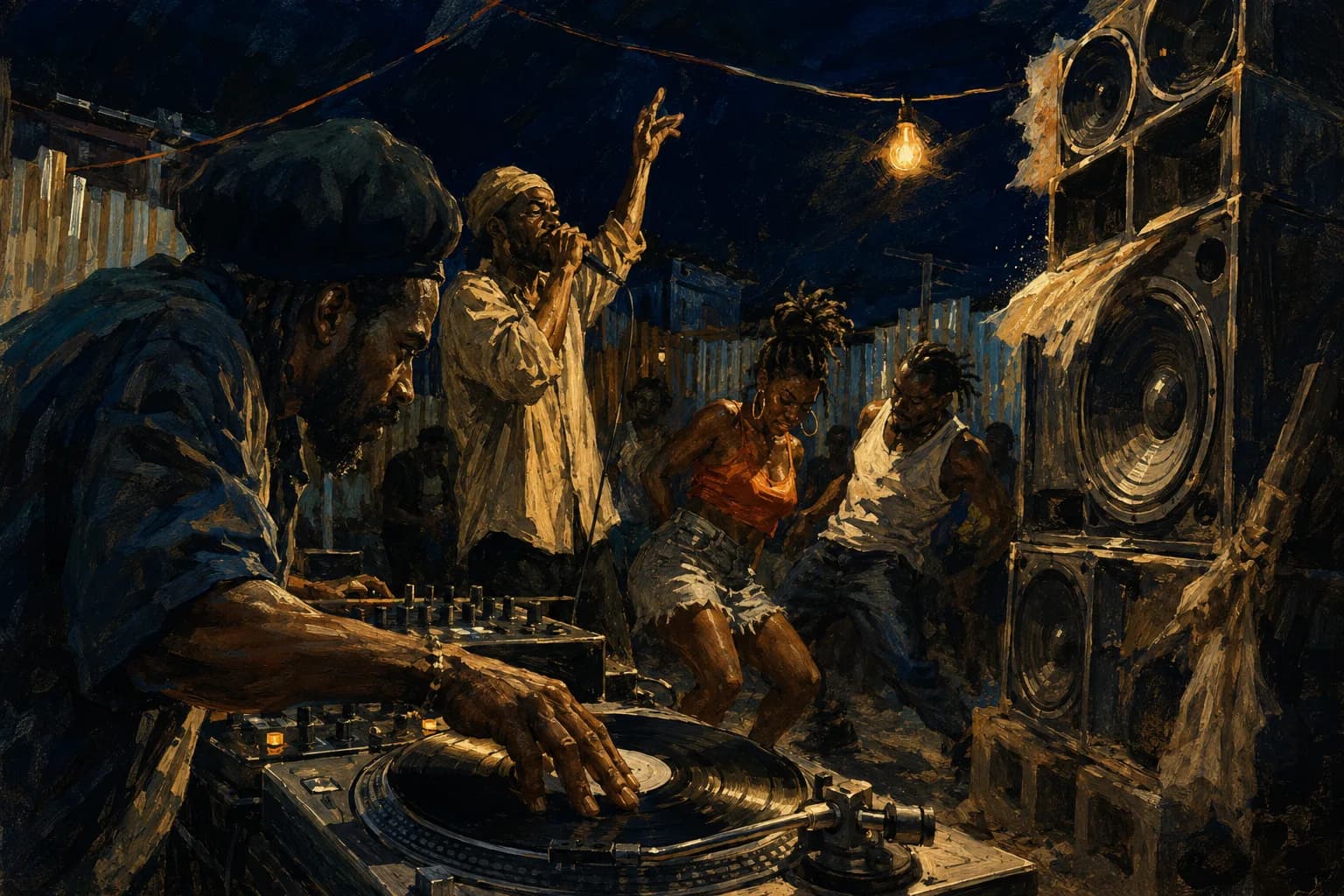
Land here: the region has seen this before. The Caribbean has always run on oral transmission — the proverb, the nickname, the story told on the veranda, the culture passed mouth to ear because the official record couldn't be trusted with it. The creator wave is not a break from that tradition; it is the tradition, upgraded in range. The veranda now reaches Brixton. The auntie's verdict now lands in Brampton the same afternoon. The granny in the saltfish video is doing precisely what grannies have done for three centuries — holding court, keeping standards, transmitting the culture through performance — except the yard now holds two million people, and the ones crying laughing in the comments, five time zones away, are exactly who the performance was always for: the family, gathered, listening.
The phone is the new veranda. The feed is the new barrel. And the record — for once — is being kept by its owners.
Editorial note
LuxTuris original
This is evergreen editorial context from the LuxTuris desk, not live breaking news or invented social proof.