 Language
The Language of Home: Creole, Identity, and Caribbean Confidence
Two strangers in a cold-country supermarket switch into the language of home and become instant kin — the confidence arc of Caribbean creole in one aisle.
LuxTuris Editorial Desk · May 21, 2026
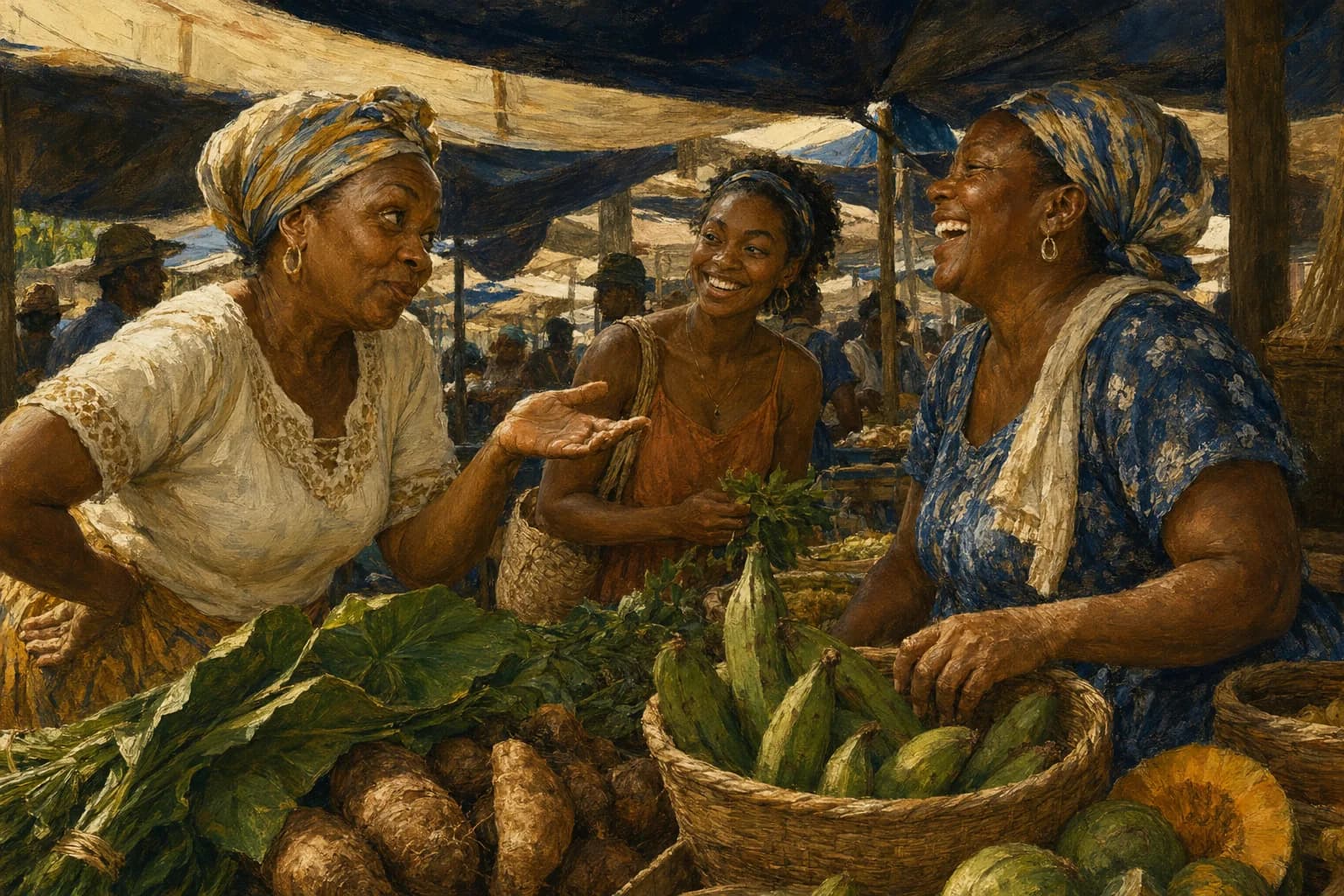
A supermarket queue in a city far from any island — London, say, or Toronto in February. Two strangers, and one of them, on the phone, lets a single sentence slip out of its formal clothes: a cyaan believe here, a dropped consonant there, a melody in the complaint. The other stranger's head turns before politeness can stop it. Eye contact. The smallest smile. And then it happens — the switch — both of them stepping out of the language of the queue and into the language of home, mid-aisle, instant kin: Which part yuh from? Thirty seconds ago they were two anonymous coats in a cold country. One sentence of the home tongue identified them to each other faster and more completely than any passport could.
That moment — repeated daily in every diaspora city on earth — is the thesis walking around in real life: across the Caribbean and its scattered nations, language is the clearest sign of belonging there is. The voice carries the whole history, whether or not the speaker intends a historical point. And the story of that voice — punished, shamed, then reclaimed — is one of the great confidence arcs of the modern Caribbean.
Not one Creole — a family of languages
First, precision, because the flattening starts with the singular noun. There is no one "Creole." There is a family of full languages, each with its own grammar, literature, and history:
Jamaican Patois (Patwa), the most globally exported through music, spoken by millions on the island and abroad. Trinidadian Creole, with its own melody and a lexicon flavored by the island's French-creole past and Indian heritage. Kwéyòl — the French-based creole of Saint Lucia and Dominica, close cousins to each other and to Martinican and Guadeloupean Créole, legacies of the islands' French centuries; Saint Lucia celebrates it nationally every October on Jounen Kwéyòl. Haitian Kreyòl, the giant of the family — the language of over ten million people and one of the few creoles on earth with full official status. Papiamento (Papiamentu), the Iberian-based creole of Aruba, Bonaire and Curaçao, official, taught, and thriving. And beyond them, the creoles of Suriname, the Garifuna language, Bajan and the other English-lexicon dialects along the chain — each island's speech its own fingerprint, recognizable to its people at one sentence's distance.
How the languages were born
The history deserves four careful sentences. Many Caribbean creoles developed under colonial conditions that forced speakers of different languages into sustained, unequal contact: enslaved Africans, speaking many different West and Central African languages, were thrown together under European powers and forced to build a common tongue at speed. What emerged was not "broken" anything — it was construction: vocabularies often drew heavily from European colonial languages, while grammar, sound and meaning developed through complex contact among African, European and, in some places, Indigenous languages. Linguists continue to debate the relative contribution of particular sources and processes. Within a generation or two, these contact languages became mother tongues — full natural languages, as rule-governed and expressive as any on earth. That is the technical truth colonial education spent centuries denying: the creoles are not failed European languages; they are successful Caribbean ones, invented by people who were given nothing and built a tongue anyway.
The confidence arc
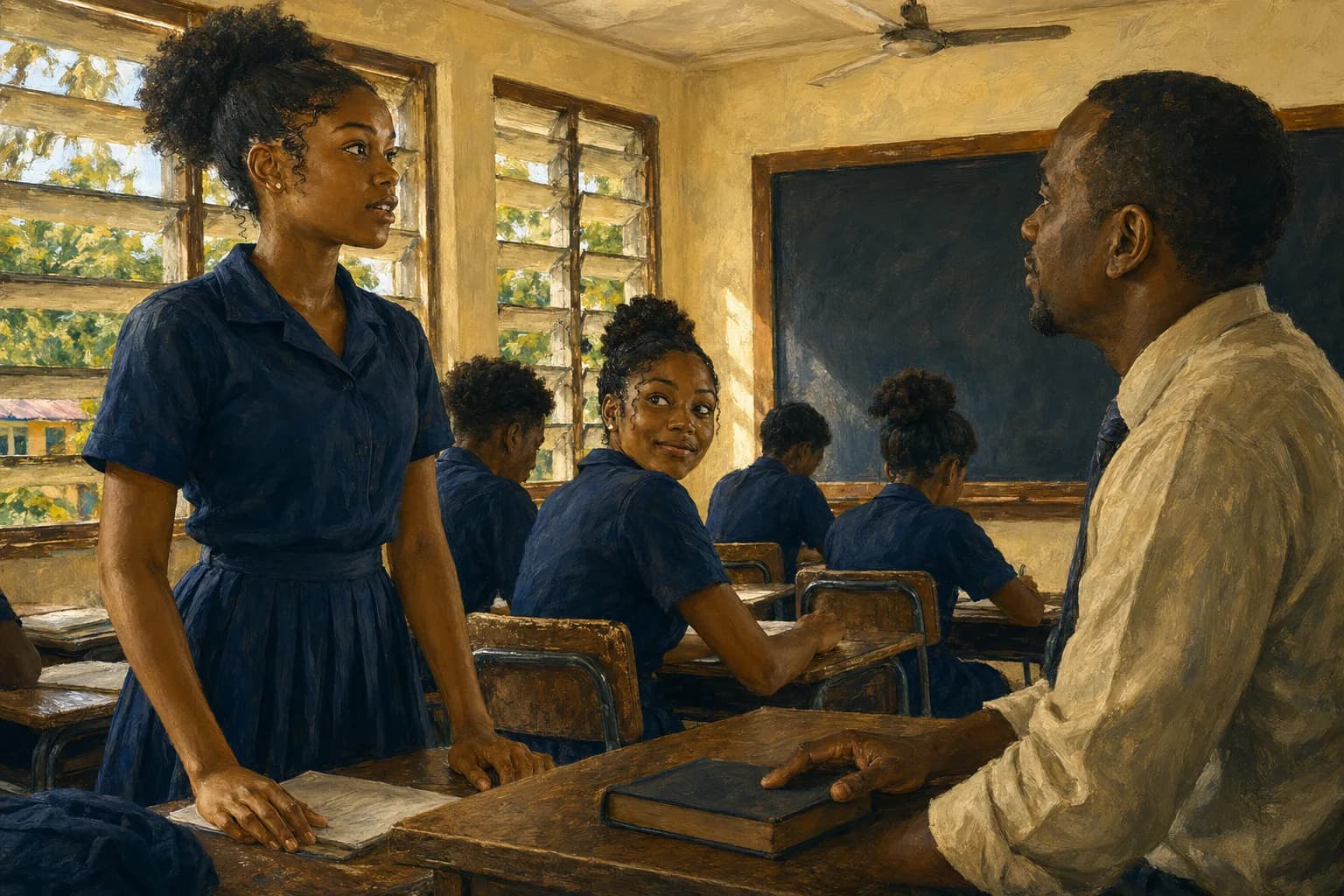
Because denial was the policy. For generations, Caribbean classrooms treated the home language as a defect — children punished or ridiculed for speaking patois at school, taught that their mother tongue was "bad English" or "broken French," that advancement required amputating the voice of the yard. The shame was engineered, and it worked on millions: the internalized reflex that the home tongue is for private life only, that intelligence must be performed in the colonizer's accent.
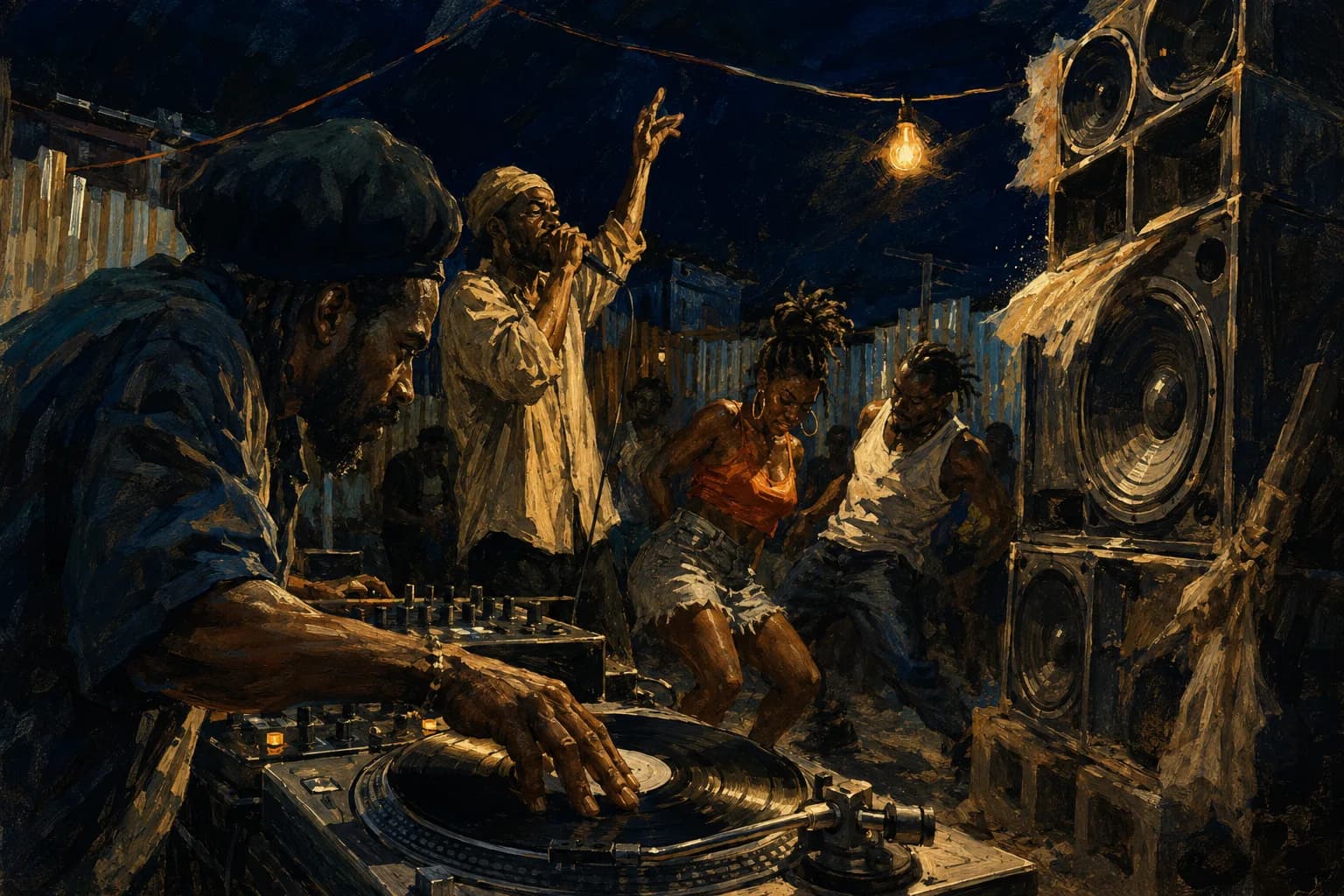
The reclamation, then, is one of the region's proudest projects, and it has dates and names. Louise Bennett-Coverley — Miss Lou — stands at its head: from the 1940s onward the Jamaican poet and performer put Patois on stage, on radio, on the page, insisting with scholarship and mischief that Jamaican talk was literature, famously skewering the "corruption" charge by noting that if Patois corrupts English, then English is itself a corruption of Norman French and the rest. Behind and after her: the poets and dub poets who wrote the languages proudly, the linguists (the University of the West Indies' language scholars among them) who documented the grammars, the reggae and dancehall artists who exported Patois to every continent without apology. And the institutional victories: Haiti's 1987 constitution made Kreyòl an official language alongside French — the language of the entire people finally ranked with the language of the elite; Papiamento gained official status in Aruba (2003) and Curaçao (2007); Kwéyòl is celebrated and taught where it was once beaten out; and in 2012 the New Testament was published in Jamaican Patois — Di Jamiekan Nyuu Testiment — the language of the yard rendered fit, officially, for scripture.
The arc, compressed: punished in the schoolyard, crowned in the constitution — within living memory.
The diaspora stakes
Which makes the current chapter the tense one, because the languages' newest threat is not shame but distance. In Brooklyn, Birmingham and Brampton lives a vast second generation that understands the home language completely — raised inside its sound, able to follow every word of the grandmother's story — but will not, or feels it cannot, speak it. The receptive bilingual: fluent ears, silent tongue, held back by the fear of getting it wrong in front of the people who own it, of being laughed at for a foreign-accented Patois. Language is the piece of the inheritance most at risk precisely because, unlike the recipes and the music, it cannot be stored — it lives only in use, and one unspeaking generation is all extinction requires.
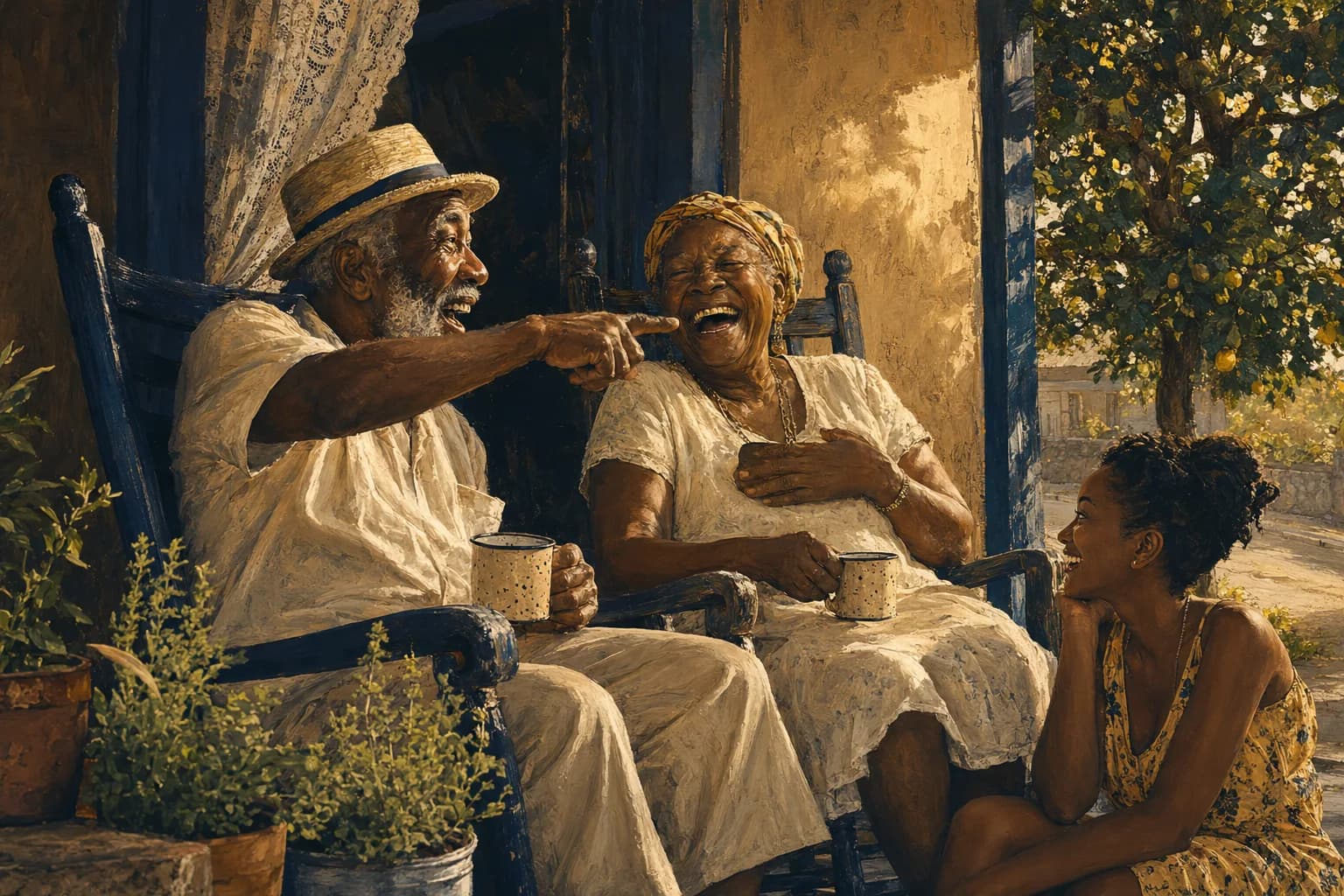
The counterforce, encouragingly, is the culture itself: the music keeps the languages in young ears worldwide; the internet has become an unplanned language school, comment sections and voice notes and skits conducted gloriously in creole; and the diaspora kid who captions a post in Patois is doing, in miniature, exactly what Miss Lou did on the radio — using the language in public, on purpose.
Speaking as confidence
So the piece lands where the supermarket queue began. Every act of speaking a Caribbean creole — the poem, the caption, the prayer, the joke told properly, the second-generation kid risking their imperfect Kwéyòl on an amused and delighted grandmother — is a small vote in a long referendum, and the question on the ballot never changes: is the language our ancestors built under the worst circumstances imaginable worth carrying forward? The colonial classroom voted no for centuries. The constitution of Haiti, the stage of Miss Lou, and two strangers switching tongues in a cold-country supermarket have been voting yes ever since.
Speak it where it is yours to speak. Learn it with humility where it is an inheritance you are recovering. These languages emerged under violent colonial conditions, but they are not defined by violence alone. They carry domestic tenderness, scholarship, argument, prayer, comedy and ordinary life. Their future depends not simply on making noise, but on making room.
Editorial note
LuxTuris original
This is evergreen editorial context from the LuxTuris desk, not live breaking news or invented social proof.