 Heritage
The Whole House Sits the Exam: CSEC Season in Caribbean Family Life
The television goes off at seven, the calendar has a date circled in red — CSEC season turns the whole Caribbean household into a support system for one exam.
LuxTuris Editorial Desk · May 28, 2026
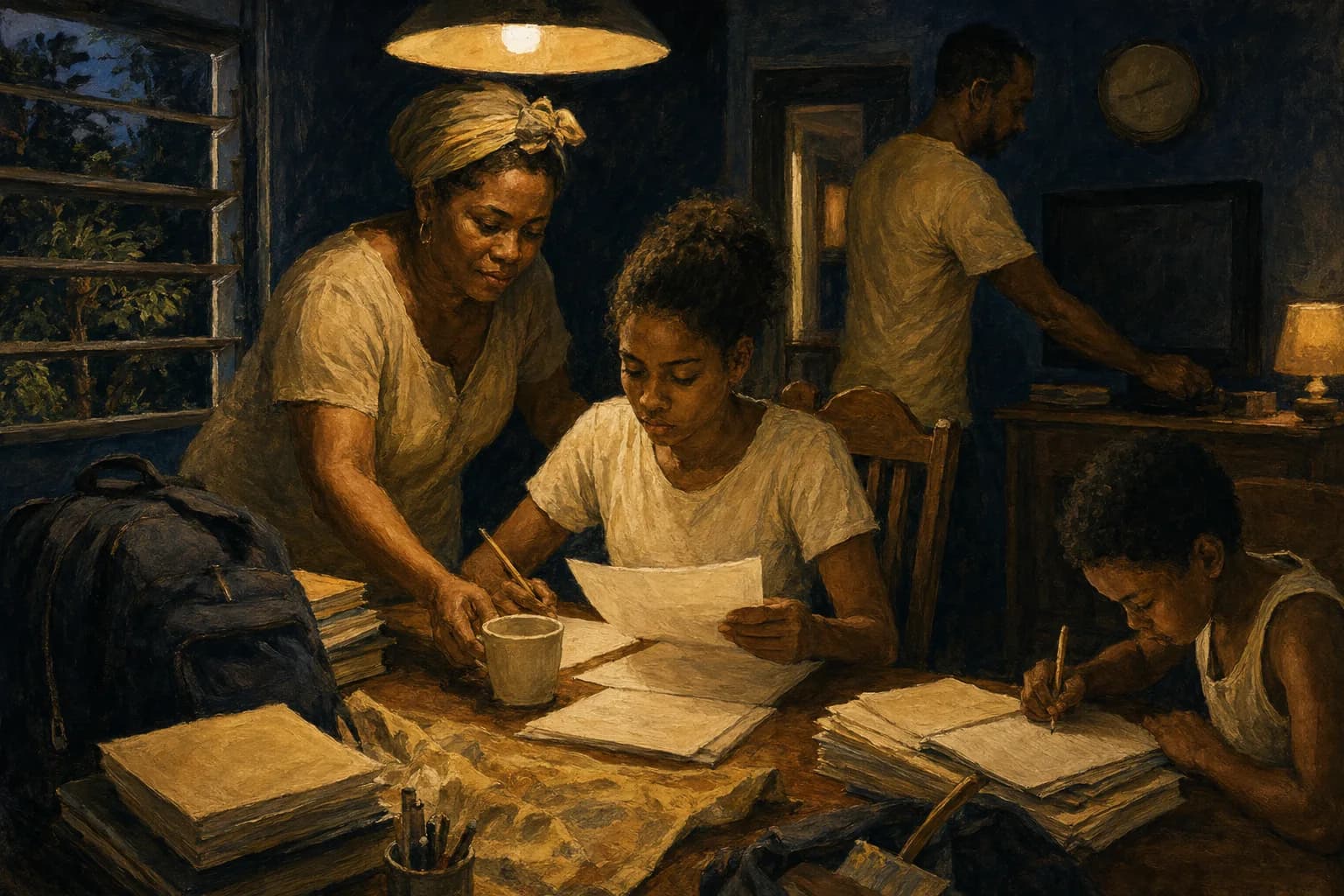
Across CSEC-participating countries, dining tables are requisitioned as examinations approach. This one has belonged since Easter to stacks of past papers — the photocopied stacks of them, sorted by subject, annotated in three colors — and to the girl bent over them, and the household has reorganized itself around her like traffic around roadworks. The television goes off at seven now, by unspoken order. Her little brother has learned to conduct his entire childhood at reduced volume. Her mother has adjusted the cooking schedule so the good meals land on the heavy study nights, and appears at the table at intervals with fruit, or juice, or simply a hand on the shoulder and a look. Her father, not a demonstrative man, has taken to driving her to extra lessons on Saturdays and waiting outside for two hours, which is his love language rendered in gasoline. On the wall, a calendar with a date circled in red. The whole household feels enlisted in the examination, although only one person will hold the pencil.
Versions of this scene recur across CSEC-participating countries each year. The details vary by household and territory, but the season is familiar enough to function as a shared regional experience. Exam season is not merely academic. It is a household season, with rituals, foods, prayers and stakes of its own, and it deserves to be written about the way harvests and carnivals are.
Two sentences for the diaspora reader
For readers raised outside the system: CSEC, the Caribbean Secondary Education Certificate administered by the Caribbean Examinations Council, was first offered in 1979. Students generally sit individual subjects near the end of secondary school, although age, subject load and national practice vary. The results remain an important currency of qualification across much of the region: "how many subjects yuh have?" is a question that follows Caribbean people through job interviews, family assessments and diaspora dinner parties for the rest of their lives, and the difference between passing Maths and English and not passing them can redirect a life. That is the weight the girl at the dining table is carrying. Now, back to the household.
The rituals of the season
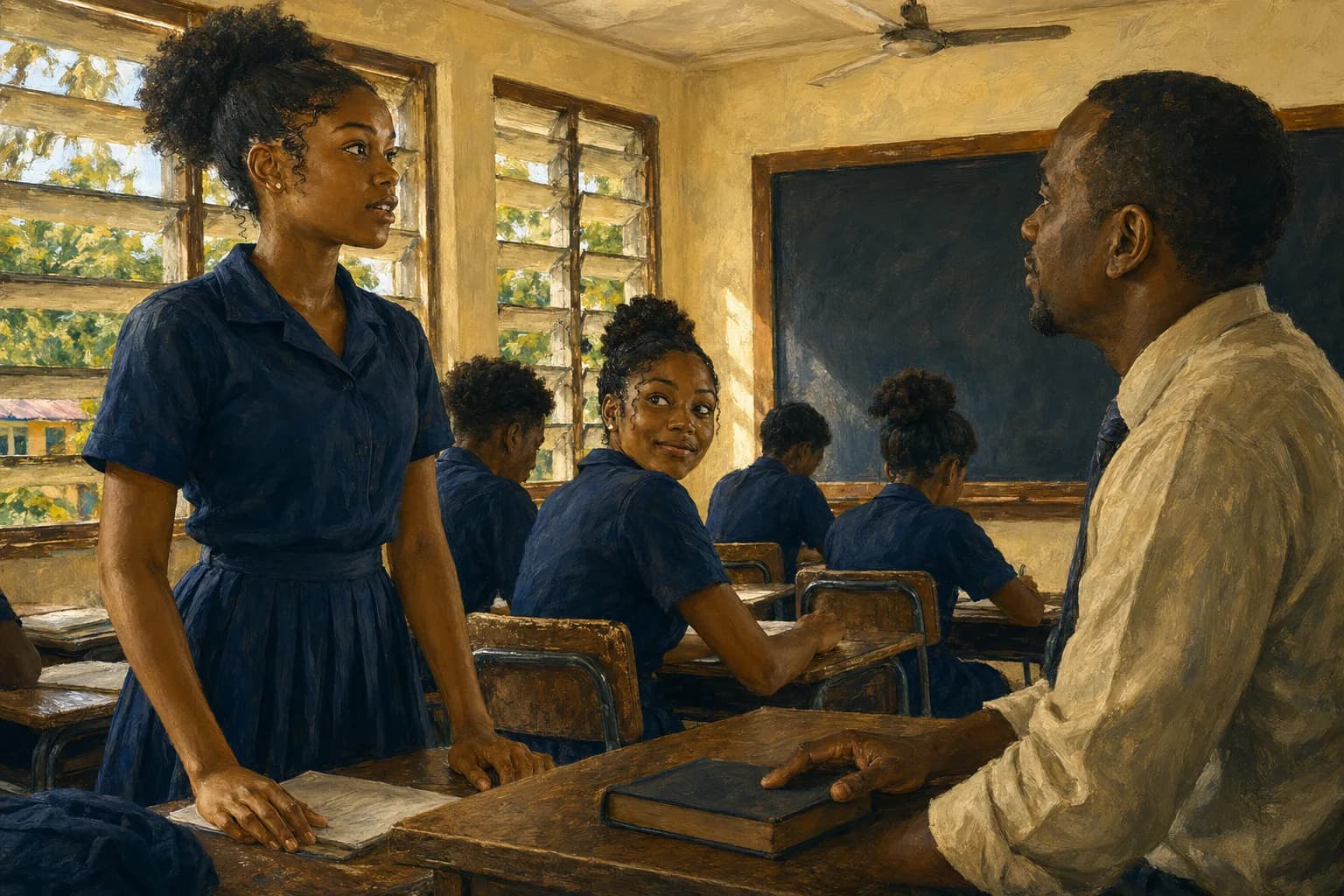
The season has its institutions, and the first is lessons — extra classes, the parallel school system that operates evenings, Saturdays and holidays in teachers' homes, church halls and classrooms across the region. Lessons are so embedded that they are less a supplement than a rite: families that can barely afford them find the fees, teachers build second careers on them, and generations of students share the memory of Saturday mornings surrendered to a hot classroom and a teacher who has taught the same syllabus so long she can recite the examiners' habits like weather patterns. Around lessons, the study group — three or four classmates rotating between houses, ostensibly for revision, actually for the irreplaceable comfort of shared suffering, supervised by whichever mother's house it is with snacks and one raised eyebrow.
Then the community joins in. The church prayer for exam students is a fixture across denominations — the season's candidates called to the front some Sunday in April or May, hands laid on, the congregation asked to remember them; even households of modest religiosity tend to accept all available coverage in exam season. Grandmothers deploy their own liturgies: the special breakfasts on exam mornings, the reminders to "write your name FIRST," the bush tea for concentration whose efficacy is beside the point — the point is that someone made it for you. And running under everything, the season's soundtrack of instruction: you see your books? — the parental refrain, half nag and half blessing, of families for whom education has always been the strategy.
Why the pressure is history
Because it is a strategy — and this is the piece's real payload. The Caribbean's intensity about examinations is not a temperament; it is an inheritance with a traceable origin. For the descendants of enslaved and indentured people, in societies where land and capital were captured by others for centuries, education was the one ladder that could not be easily confiscated — the route from the village to the civil service, from the cane field's shadow to the professions. The scholarship exam, the grammar school place, the certificate: these were the region's liberation technology, and families treated them accordingly, pouring sacrifice into children's schooling with an intensity that outsiders sometimes misread as harshness and insiders understand as history. Every circled date on every kitchen calendar sits in that lineage. So do the stakes as families narrate them: subjects as forks in the road — the sciences toward medicine, the passes that unlock sixth form, the certificate that supports the visa application — and threaded through it all, spoken or not, the migration dream: the awareness that a Caribbean qualification is often the first document in a longer journey, and that the girl at the table may be studying, in part, for a life that will be lived somewhere else and remitted home.
Which is also where the season's honest tension lives, and the culture increasingly says so out loud: the line between high standards and heavy weight. When every grade feels like a verdict on the family's sacrifice, sixteen-year-olds carry loads that would stagger adults, and the healthiest households of the season — more of them every generation — are the ones that hold the ambition while insisting, audibly, that the child is more than one paper.
The season exported
The tradition emigrated with everyone else. Caribbean parents in London, New York and Toronto — themselves veterans of CSEC, CXC or the O-levels before them — imported the whole apparatus into school systems that often mystified them with their apparent casualness: the Saturday lessons recreated in diaspora community programs, the requisitioned dining table, the television embargo, the refrain about books, all deployed at latitude 43 north. Second-generation readers will recognize the season instantly even if they never sat the exam itself — the specific atmosphere of a West Indian household in academic emergency mode — because the season, it turns out, was never really about the particular exam. It was about the strategy, and the strategy travels.
Results morning
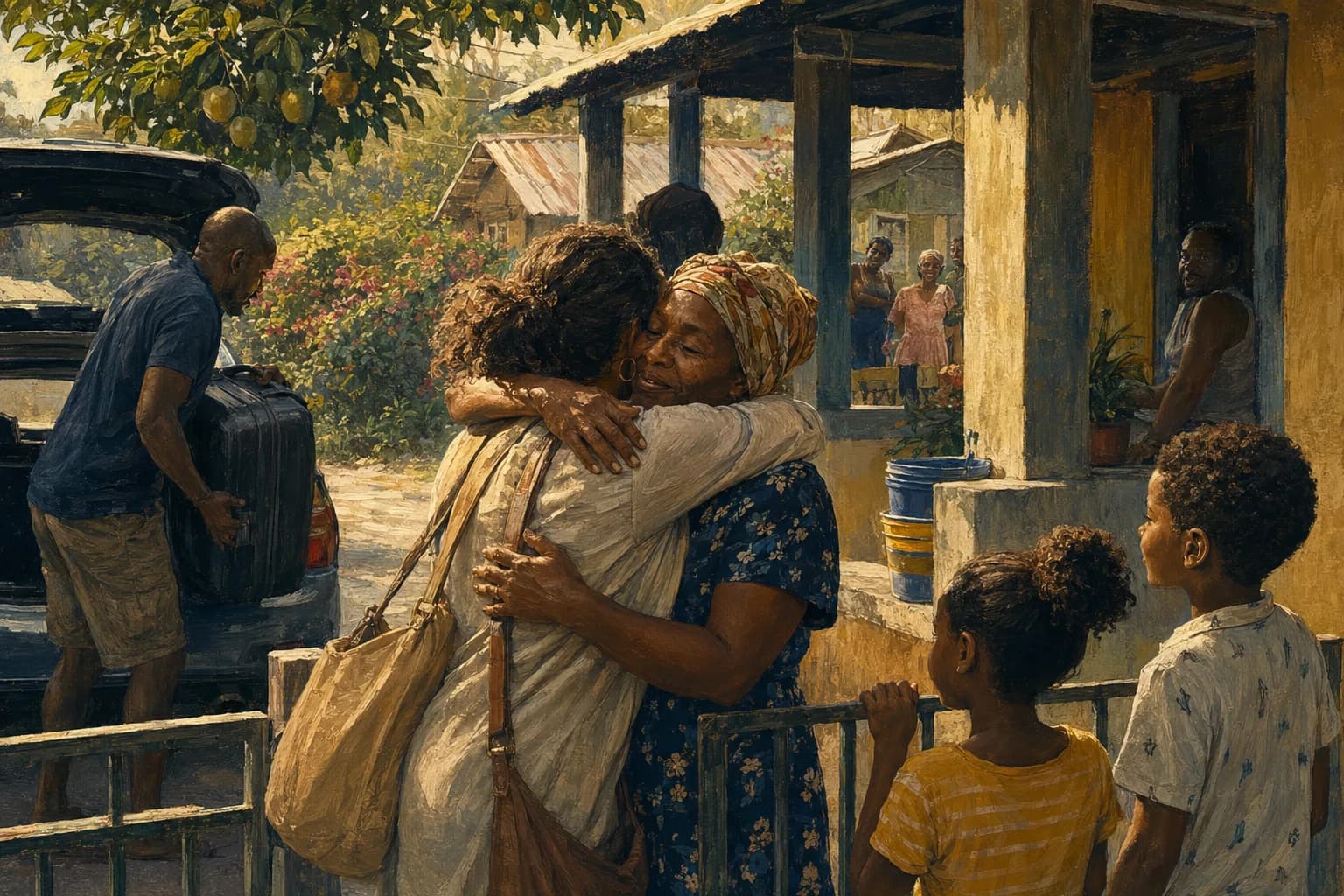
And then, in August, it ends the way it has ended for decades. Results morning: once a pilgrimage back to the school to read the lists, now an online portal that families across participating countries refresh at the appointed hour, sometimes under heavy demand. In the house, the girl has the phone; the household hovers at a distance calibrated to look casual. The page loads. A silence with a heartbeat in it. Then the sound — every street in the region knows it by tone alone — that tells the neighbors before any words do: the shriek, the mother's answering shout, the phone already ringing because the grandmother demands to be told subject by subject, grade by grade, and will repeat each one aloud like a litany. Eight subjects. The girl who held the pencil is embraced by the household that sat the exam with her. Somewhere a pot goes on; something good is cooking tonight. And on the wall, the calendar with the red circle has already surrendered its authority — until the next child in the family reaches fourth form, and the table is requisitioned again.
Editorial note
LuxTuris original
This is evergreen editorial context from the LuxTuris desk, not live breaking news or invented social proof.